Ireland has spent eight decades nurturing the ecosystem that advanced medical technologies demand — and the convergence of life sciences, AI and deep tech happening on this small island is unlike anywhere else in the world.
Disclaimer: The Reuters news staff had no role in the production of this content. It was created by Reuters Plus, the brand marketing studio of Reuters. To work with Reuters Plus, contact us here.
Invest in Ireland
With skilled talent, supportive incentives and a stable economy,�Ireland is the perfect platform for world-leading companies to scale and grow.
Find out how to Invest in Ireland here.
Where MedTech �meets what's next


MedTech manufacturers today are innovating at an extraordinary pace and creating devices and technologies that are more complex than ever before. Advanced products are being sensorized, miniaturized, digitized and brought to market at scale; and with increasing speed – all in full compliance with regulatory standards. As a result, patients are receiving better and more targeted treatments that impact their care and quality of life.
This is no longer simply a manufacturing story of making medical devices. Only the most evolved business ecosystem can fully adapt to invent and produce the advanced products that today’s healthcare needs demand. MedTech companies need an environment that has deep expertise in engineering, materials, data management and artificial intelligence, alongside reliable supply chains, stability and regulatory alignment.
Nowhere does MedTech better than Ireland. Over eight decades, Ireland has built a unique competency that has made it a critical global gateway for the development, production and supply of medical devices.
On our small island, our highly developed MedTech sector works side by side with the world's leading technology companies, biopharma businesses and digital health providers. Irish owned MedTech firms, staffed by highly skilled teams, work collaboratively with the life sciences multinationals that operate close by. The sector is supported by a network of world class indigenous suppliers of engineering, technology, services and materials; and contract manufacturers to support scaling.
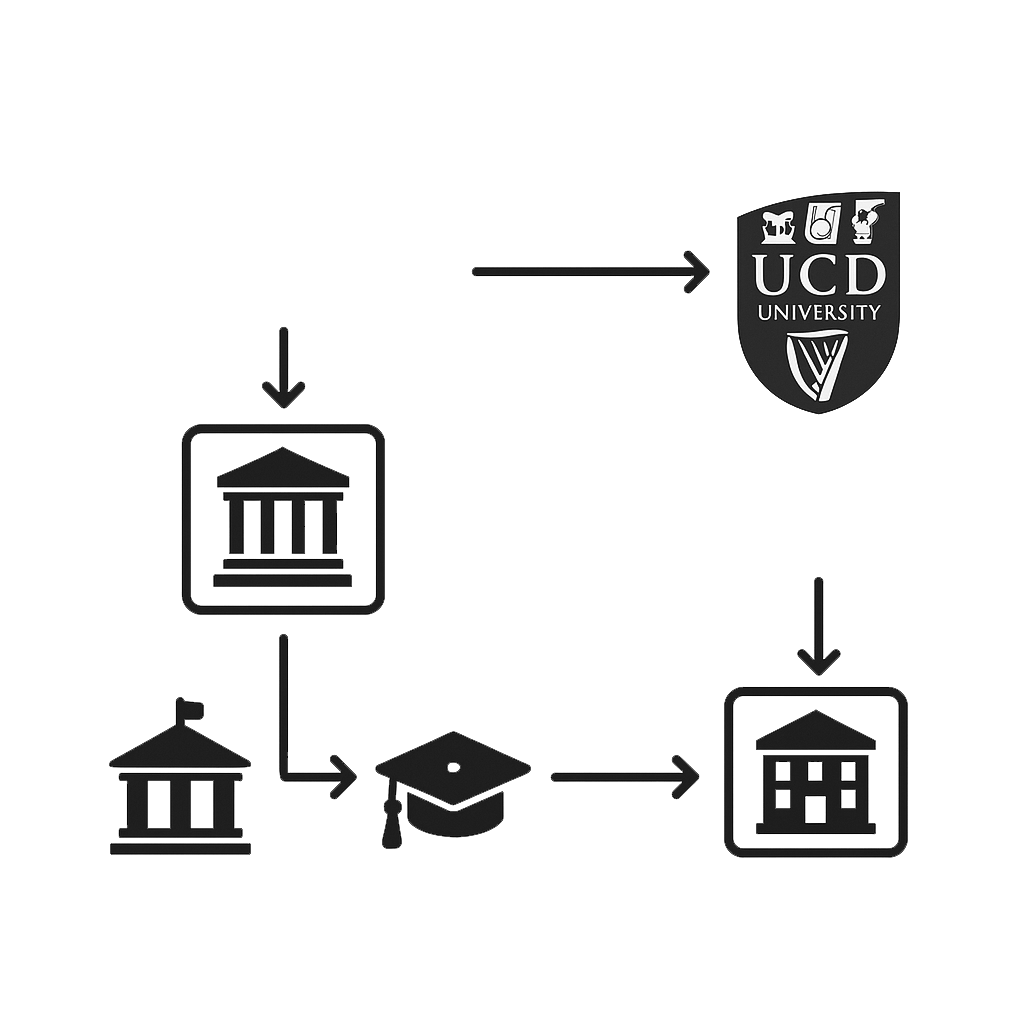
IRELAND'S INNOVATION ECHOSYSTEM
Government
Academia
K-NIBRT
South Korea
NIBRT
University
College
Dublin


JAPAN-IRELAND
BUSINESS RELATIONS
1973
Embassy of Japan opens
8000
Employees
44
Japaneese companies present in Ireland
County Kerry
Gallway
Dublin
Something about
Ireland's
Global
Business
Connections
Asian Investment in Ireland
Talent & Workforce
the highest number �of MedTech jobs per �capita in the EU

leading global biopharmaceutical companies
13 out of 15
FDI Investments
This is why Ireland is home to 14 of the world's top 15 MedTech companies.1

employed in specialist sectors, including cardiovascular, orthopedic, neurovascular and diabetes care
973
separate FDI investments
We have the highest number of MedTech jobs per capita in the EU, with 50,000 employed1 in specialist sectors ranging from cardio & neurovascular, orthopedic and diabetes care to vision care and advanced diagnostics. The skills of this talent pool are broad and deep. With a talent pipeline supplied by globally recognized universities and institutions, Ireland has the highest number of STEM graduates per capita in the EU.2
77,000
new Irish jobs from post-pandemic strategy between 2021-2024


50,000


By Rachel Shelly�Global Head of Life Sciences & Food, IDA Ireland
#1
Our MedTech roots run deep. Abbott has been in Ireland for almost eight decades; and announced a €440 million investment at its sites in Donegal and Kilkenny, which is a global manufacturing center of excellence for the multinational's growing diabetes care business and employs 800 people. The highly sophisticated facility produces the FreeStyle Libre continuous glucose monitoring system.7
Boston Scientific, this year announced a €75 million investment in its Galway site,8 expanding its cutting-edge R&D capabilities at this global center for cardiovascular innovation. Stryker began operations in 1998 with 20 people and has since expanded to more than 4,000 staff across six sites spanning R&D and manufacturing, including one of the world’s largest additive manufacturing sites in Cork.9 Most recently Datavant, the data collaboration platform for healthcare providers, officially opened its state-of-the-art global technology R&D center in Galway where it employs 100 staff, just one year after establishing in Ireland.10
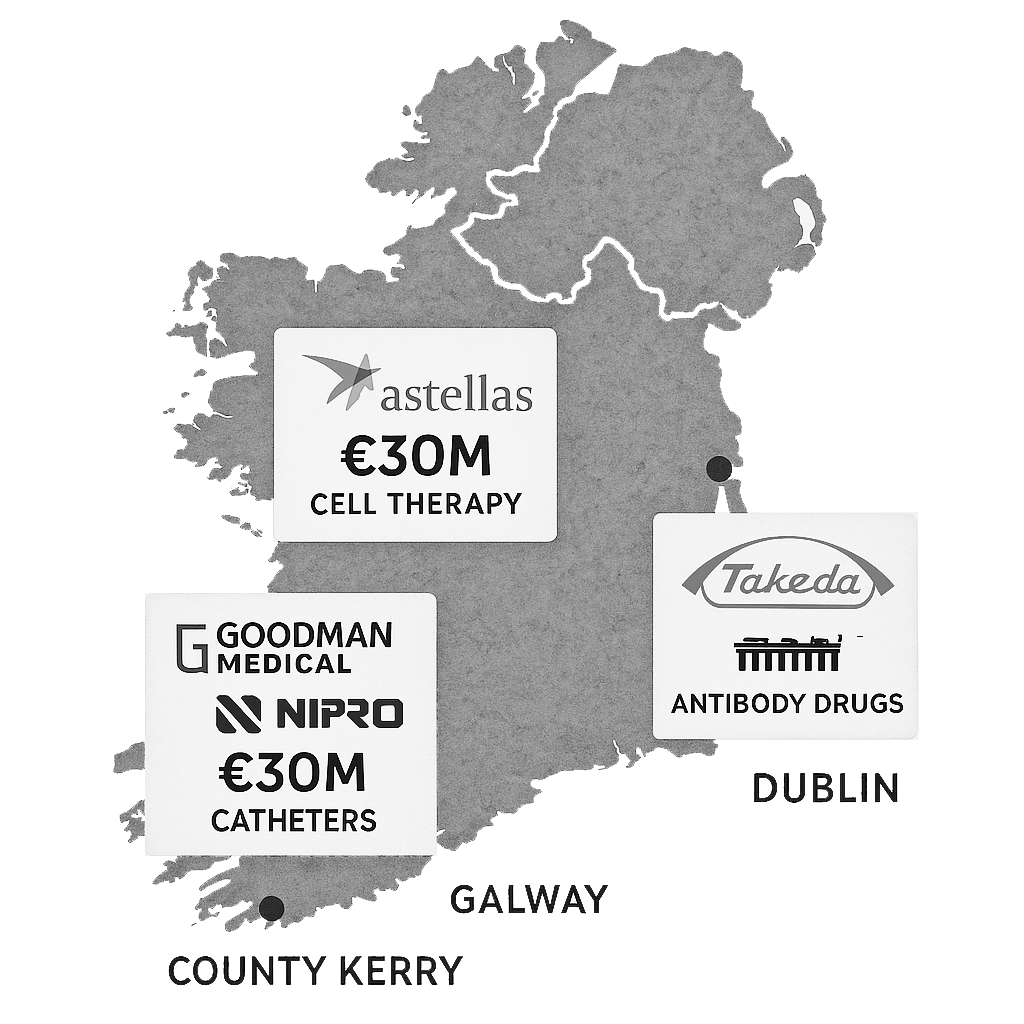
Ireland's relationship with Asian life sciences companies is well established. Astellas, which arrived in Ireland 35 years ago, last year announced a further €129 million investment to grow its operations in Dublin and Kerry – on top of its €330m new aseptic drug products facility under construction. The Tokyo-headquartered company chooses Ireland as a strategic hub for its manufacturing, research and development activities and employs over 600 people here. Its Irish facilities supply medicines to 133 countries,11 and the company is expanding into advanced therapeutic technology and antibody-drug conjugates for use in cancer care.
Many MedTech companies that arrive in Ireland with one specific intention later expand their activities after experiencing our ecosystem firsthand and seeing the potential to grow and add new mandates. When companies spend time engaging with the ecosystem in Ireland, and with the universities and multinationals that are already here, they get a real understanding of why companies invest over and over again.
people directly employed in Ireland's tech sector, providing expertise in AI, cloud, data, software, hardware and cybersecurity
invested in R&D in 2025 by �Ireland-based multinationals, �including many life sciences companies
€2.5bn
100,000+


The technology advantage
Critically, MedTech companies in Ireland benefit from their proximity to a world class technology sector that directly employs over 100,000 people3 and includes most of the world's leading technology firms, spanning semiconductors (Intel, Analog), cloud and data (Google, AWS), enterprise tech (Microsoft, IBM) and AI (OpenAI and Anthropic). This creates a talent pool with a full suite of technology skills, ranging from hardware and software to cloud, data, AI and cybersecurity.
This accessibility to technological expertise will enable Ireland's MedTech companies to develop the next-generation devices that will serve the patients of the future. Ireland has a palpable culture of innovation. Two-thirds of the MedTech companies based in Ireland have already established research and development operations here, and €2.5 billion was committed in R&D last year by Ireland-based multinationals,4 much of it by life science companies.
Ireland's MedTech sector thrives in part to the government support that surrounds it. Research Ireland, the government agency responsible for research and innovation, recently announced a €460 million investment in a network of seven Rinn research centers5 dedicated to multidisciplinary research and innovation in areas including medical devices, pharma and pharma manufacturing, advanced therapies, AI and data science. Rinn is the Irish word for headland or point, and these centers embody our desire to be at the forefront of medical technologies. The €64.5 million Rinn Medical Devices Center will be led by researchers from the University of Galway.6
�

1 IDA Ireland MedTech Sector page

Sources
2 CSO, "Measuring Ireland's Progress 2020" press statement

3 IDA Ireland, Technology Sector page

7 IDA Ireland press release, "Abbott Opens State-of-the-Art Global Manufacturing Facility in Kilkenny, Ireland"

8 RTÉ,"Boston Scientific invests €75m in Galway site"

9 Irish Examiner

10 Datavant press release, "Datavant hits 100 hires as it officially opens new state-of-the-art Global R&D Centre in Galway"

12 Enterprise Ireland, "Ireland's Lifesciences & Health Tech Landscape" report

5 Research Ireland


11 IDA Ireland press release, "Astellas Enhances Operations Across Ireland"

6 University of Galway news
13 The Irish Times, "Johnson & Johnson buys Irish stroke care firm in multimillion euro deal"

15 University of Limerick

16 CSO, "Ireland and the EU at 50"

17 RTÉ, "Immigration and its growing role in the Irish labour force"

18 A&L Goodbody


19 Gov.ie, Department of Health press release
4 RTÉ,"Investments into Ireland by foreign multinationals up 38%"

14 Deciphex press release

A culture of collaboration
In addition to a vibrant multinational sector, Ireland's MedTech industry is home to 400 indigenous companies12 that are globally recognized for excellence and innovation. Many multinationals have expanded their capability through acquisition of Irish SME’s. One such example, Johnson & Johnson acquired the Irish stroke-care firm Neuravi in 2017.13 Building on its foundation in innovation, J&J has developed the Galway site into a major R&D hub and center of excellence for stroke care innovation within the Johnson & Johnson MedTech portfolio.
Novartis, the global life sciences and innovative medicines company, is collaborating with Deciphex, a Dublin-based digital pathology company, to use its strength in AI to develop algorithms that can improve clinical trials and accelerate drug discovery.14
A prime example of the Irish MedTech ecosystem's cross-collaboration is the University of Limerick's iBio (Immersive Bioscience and Biotherapeutics) talent program15 for meeting the skills needs of companies on its doorstep, from J&J Vision Care, one of the world's most highly automated contact lens plants, to Edwards Lifesciences, which makes cutting edge products for cardiovascular disease, and Analog Devices' ADI Catalyst Center, an innovation hub for companies across sectors like life sciences and semiconductor to collaborate and co-create technologies.


But Ireland's MedTech ecosystem does not sit in isolation. As a proud EU member state since 1973,16 we are a bridge to and from Europe. Firms that locate here have direct access to the European market, European talent (20% of our workforce comes from outside Ireland)17 and European collaboration and research opportunities. The Irish MedTech sector is overseen by a pragmatic and well-regarded regulator, the Health Products Regulatory Authority (HPRA), which is directly aligned with EU directives. Innovative MedTech companies in Ireland benefit from an attractive 35% R&D tax credit, introduced in the 2026 budget.
Ireland’s unique ecosystem has not happened by accident. Ireland has a long-term vision for development of the sector, and it is supported across the political spectrum, ensuring lasting stability and certainty for investors. A series of carefully interwoven national strategies enable related sectors to support each other as they advance. The National Life Sciences Strategy will be launched this year,18 to drive and plan for future sectoral growth, while a National Digital & AI Strategy was unveiled earlier this year.19 Digital Manufacturing Ireland was launched in 2023 to advance the adoption and scaling of digital technologies in manufacturing. NIBRT continues to partner with the biopharma industry to accelerate the development of advanced therapies.
The MedTech sector is saving and improving more lives than ever. In choosing Ireland you are becoming part of an unrivalled ecosystem, with an ingrained culture of innovation and access to an abundance of highly skilled talent — underpinned by a regulatory system you can trust. In a world of economic and geopolitical uncertainty, you can be sure that Ireland’s MedTech sector will remain focused and resilient, adapting and evolving to industry needs and the global environment. Its firm foundations are built on deep commitment to competitiveness and innovation, a proven track record for operational excellence and a ‘can do’ spirit of partnership and collaboration.
IDA Ireland is proud to work with global companies that are making such a positive impact on patients’ lives all around the world. Come to Ireland and let’s build the next generation of Medical Technologies.�
The MedTech sector is saving and improving more lives than ever, creating an unrivalled ecosystem.


CHOOSE LANGUAGE:
JP
EN
KR
The Reuters news staff had no role in the production of this content. It was created by Reuters Plus, the brand marketing studio of Reuters.

Produced by Reuters Plus for

