
The Reuters news staff had no role in the production of this content. It was created by Reuters Plus, the brand marketing studio of Reuters.
Produced by Reuters Plus for

Disclaimer: The Reuters news staff had no role in the production of this content. It was created by Reuters Plus, the brand marketing studio of Reuters. To work with Reuters Plus, contact us here.


Tohoku today:
A region reborn
A region reborn
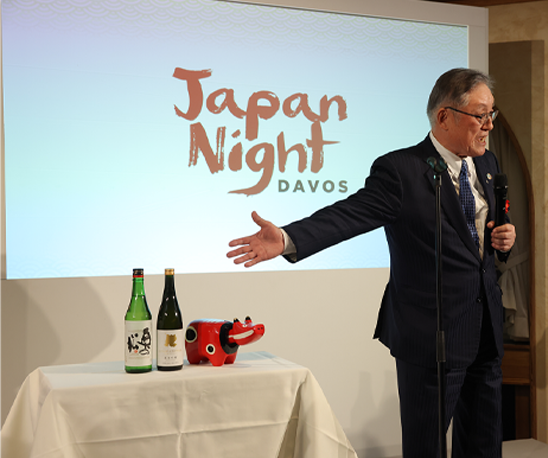
Fifteen years after the earthquake, tsunami and nuclear disaster of March 11, 2011, northeastern Japan has emerged not as a place defined by loss, but by renewal and resilience. Across the Tohoku region, communities that were battered by the disaster have rebuilt and are inviting international visitors to experience their beauty, hospitality and resilient spirit firsthand. This year, the region also took a major step in sharing its story globally by participating in “Japan Night” at the World Economic Forum in Davos — an opportunity to present Tohoku’s recovery and future to leaders from around the world.
Farms have been restored, fisheries revived, railways rebuilt along dramatic coastlines and cultural traditions preserved. Travelers who venture north are discovering a side of Japan that is both traditional and forward-looking, where visitors are welcomed not as spectators of loss, but as guests in thriving communities.
Read next


Just 2-3 hours north of Tokyo by high-speed train (Shinkansen), Tohoku offers some of Japan’s most picturesque scenery — rocky coasts, verdant rolling farmland and pine-clad islets dotting Matsushima Bay, one of Japan’s famed “Three Most Scenic Views.” The region invites exploration at every pace — by scenic railway, coastal boat cruises, hiking trails, kayaking routes or by soaking in one of the many onsen hot springs nestled in the hills. It is also famous for its delicious seafood, fruit and sake.
Intertwined in the beauty are inspiring stories of perseverance and hope. Fukushima peach farmer Mr. Masahiro Minami personifies the region’s resilience. Fukushima’s reputation as Japan’s “fruit kingdom” took a hit after the disaster, but Mr. Minami never considered giving up and leaving. He decontaminated all 500 trees in his orchard from any radioactive fallout and replanted some, hoping to salvage the farm he inherited from his father.
The first couple of years he sold hardly any peaches, but as radiation tests showed they were safe to eat, consumers began to buy them again. Now his determined spirit has paid off: sales have surpassed pre-disaster levels.
“Farming is hard work, but it’s also fun. I raise big, sweet peaches, so please come visit,” Mr. Minami says about his farm, located along “Peach Road,” lined by dozens of peach orchards.

Farming is hard work, but it’s also fun. I raise big, sweet peaches, so please come visit
“
Mr. Masahiro Minami - FUKUSHIMA PEACH FARMER
Likewise, Daishichi Sake Brewery, located in the Fukushima castle town of Nihonmatsu, faced hardship after the disaster, but has seen its sales recover and exports to the United States and 20 other countries grow.
Daishichi has been brewing sake for 10 generations — since 1752 — using the traditional and now rare kimoto method that President Shichiemon Ohta believes provides a superior taste. Every day, his brewery gets at least a couple of tour groups and about 30% of the visitors are foreign people, he said. Foreign consumers are becoming increasingly interested and knowledgeable about sake, he said.
�“In the past, people may have drunk it only with sushi, but now they’re realizing how versatile it is, and that it can be drunk with numerous Western dishes,” Ohta said. It pairs particularly well with creamy dishes that use butter or cheese as well as with stewed meats.


More foreign visitors are venturing into the interior regions like Fukushima, Ohta says. “Before, tourists would go to Tokyo Disneyland or Kyoto, but now many want to see more of the natural side of Japan. Fukushima has many unknown charms. Its nature is abundant and the sake is delicious.” Click this link for a glimpse of “Japan Night Davos 2026” at the World Economic Forum, where sake and peach juice were featured.
To the north, the Rias Line of the Sanriku Railway, which runs along the rugged, scenic coast of Iwate Prefecture, is another symbol of recovery. The disaster destroyed stations and washed away tracks. After years of reconstruction work, the northern and southern sections were restored and connected in 2019 to create a single 163-kilometer route.
�


It offers tourists a relaxing way to take in the ocean views, rebuilt coastline as well as visit seaside communities along the way. Visitors can take a special “disaster education train” with guides who talk about the region’s history, impact from the 2011 tsunami and the importance of disaster awareness and preparedness.
With its hundreds of small islands, Matsushima Bay in Miyagi prefecture offers visitors another way to experience the region’s recovery and beauty. The tsunami disrupted fisheries, tourism and marine ecosystems, but reconstruction efforts allowed Matsushima to recover while preserving its historic charm. Today visitors will find the town lively and welcoming.
Cruise boats offer panoramic views of the bay’s forested islets. The bay is also renowned for its oysters, cultivated in the sheltered waters and celebrated for their plump texture and flavor. Visitors can enjoy them raw, grilled or fried at local restaurants or seasonal oyster huts. A winter oyster festival and casual waterfront eateries highlight how local fisheries are thriving once more. Nature lovers can explore coastal walking paths, kayak through the islands or take a bike for a spin.
For the active traveler who likes to explore at their own pace, there’s the 1,000-kilometer long Michinoku Trail that runs along the Pacific coast through dozens of communities. Visitors can take day hikes or walk for several days, stopping at towns and inns along the way to experience local culture and food, and see firsthand the ways communities have recovered from the disaster.

For travelers seeking beauty, resilience and unforgettable experiences, Tohoku is a destination ready to be discovered.
Photos by Daishichi Sake Brewery Co., Ltd.
Sanriku Railway

Sharing the Spirit and Resilience of Fukushima with the World


CHOOSE LANGUAGE:
EN
HK
SC
KR
TC
TW




The Reuters news staff had no role in the production of this content. It was created by Reuters Plus, the brand marketing studio of Reuters.
Produced by Reuters Plus for
Disclaimer: The Reuters news staff had no role in the production of this content. It was created by Reuters Plus, the brand marketing studio of Reuters. To work with Reuters Plus, contact us here.
Tohoku today:
A region reborn
A region reborn
Fifteen years after the earthquake, tsunami and nuclear disaster of March 11, 2011, northeastern Japan has emerged not as a place defined by loss, but by renewal and resilience. Across the Tohoku region, communities that were battered by the disaster have rebuilt and are inviting international visitors to experience their beauty, hospitality and resilient spirit firsthand. This year, the region also took a major step in sharing its story globally by participating in “Japan Night” at the World Economic Forum in Davos — an opportunity to present Tohoku’s recovery and future to leaders from around the world.
Farms have been restored, fisheries revived, railways rebuilt along dramatic coastlines and cultural traditions preserved. Travelers who venture north are discovering a side of Japan that is both traditional and forward-looking, where visitors are welcomed not as spectators of loss, but as guests in thriving communities.
Read next
Just 2-3 hours north of Tokyo by high-speed train (Shinkansen), Tohoku offers some of Japan’s most picturesque scenery — rocky coasts, verdant rolling farmland and pine-clad islets dotting Matsushima Bay, one of Japan’s famed “Three Most Scenic Views.” The region invites exploration at every pace — by scenic railway, coastal boat cruises, hiking trails, kayaking routes or by soaking in one of the many onsen hot springs nestled in the hills. It is also famous for its delicious seafood, fruit and sake.
Intertwined in the beauty are inspiring stories of perseverance and hope. Fukushima peach farmer Mr. Masahiro Minami personifies the region’s resilience. Fukushima’s reputation as Japan’s “fruit kingdom” took a hit after the disaster, but Mr. Minami never considered giving up and leaving. He decontaminated all 500 trees in his orchard from any radioactive fallout and replanted some, hoping to salvage the farm he inherited from his father.
The first couple of years he sold hardly any peaches, but as radiation tests showed they were safe to eat, consumers began to buy them again. Now his determined spirit has paid off: sales have surpassed pre-disaster levels.
“Farming is hard work, but it’s also fun. I raise big, sweet peaches, so please come visit,” Mr. Minami says about his farm, located along “Peach Road,” lined by dozens of peach orchards.
Farming is hard work, but it’s also fun. I raise big, sweet peaches, so please come visit
“
Mr. Masahiro Minami - FUKUSHIMA PEACH FARMER
Likewise, Daishichi Sake Brewery, located in the Fukushima castle town of Nihonmatsu, faced hardship after the disaster, but has seen its sales recover and exports to the United States and 20 other countries grow.
Daishichi has been brewing sake for 10 generations — since 1752 — using the traditional and now rare kimoto method that President Shichiemon Ohta believes provides a superior taste. Every day, his brewery gets at least a couple of tour groups and about 30% of the visitors are foreign people, he said. Foreign consumers are becoming increasingly interested and knowledgeable about sake, he said.
�“In the past, people may have drunk it only with sushi, but now they’re realizing how versatile it is, and that it can be drunk with numerous Western dishes,” Ohta said. It pairs particularly well with creamy dishes that use butter or cheese as well as with stewed meats.
More foreign visitors are venturing into the interior regions like Fukushima, Ohta says. “Before, tourists would go to Tokyo Disneyland or Kyoto, but now many want to see more of the natural side of Japan. Fukushima has many unknown charms. Its nature is abundant and the sake is delicious.” Click this link for a glimpse of “Japan Night Davos 2026” at the World Economic Forum, where sake and peach juice were featured.
To the north, the Rias Line of the Sanriku Railway, which runs along the rugged, scenic coast of Iwate Prefecture, is another symbol of recovery. The disaster destroyed stations and washed away tracks. After years of reconstruction work, the northern and southern sections were restored and connected in 2019 to create a single 163-kilometer route.
�
It offers tourists a relaxing way to take in the ocean views, rebuilt coastline as well as visit seaside communities along the way. Visitors can take a special “disaster education train” with guides who talk about the region’s history, impact from the 2011 tsunami and the importance of disaster awareness and preparedness.
With its hundreds of small islands, Matsushima Bay in Miyagi prefecture offers visitors another way to experience the region’s recovery and beauty. The tsunami disrupted fisheries, tourism and marine ecosystems, but reconstruction efforts allowed Matsushima to recover while preserving its historic charm. Today visitors will find the town lively and welcoming.
Cruise boats offer panoramic views of the bay’s forested islets. The bay is also renowned for its oysters, cultivated in the sheltered waters and celebrated for their plump texture and flavor. Visitors can enjoy them raw, grilled or fried at local restaurants or seasonal oyster huts. A winter oyster festival and casual waterfront eateries highlight how local fisheries are thriving once more. Nature lovers can explore coastal walking paths, kayak through the islands or take a bike for a spin.
For the active traveler who likes to explore at their own pace, there’s the 1,000-kilometer long Michinoku Trail that runs along the Pacific coast through dozens of communities. Visitors can take day hikes or walk for several days, stopping at towns and inns along the way to experience local culture and food, and see firsthand the ways communities have recovered from the disaster.
For travelers seeking beauty, resilience and unforgettable experiences, Tohoku is a destination ready to be discovered.
Photos by Daishichi Sake Brewery Co., Ltd.
Sanriku Railway
At World Economic Forum, Japan showcases Fukushima’s recovery


CHOOSE LANGUAGE:
EN
HK
SC
KR
TC
TW


