The Reuters news staff had no role in the production of this content. It was created by Reuters Plus, the brand marketing studio of Reuters.

PRODUCED BY REUTERS PLUS FOR

Like a vital organ that beats at the core of global healthcare, Ireland has become a key provider of innovative medical technologies and medicines that are saving lives across the world.
Disclaimer: The Reuters news staff had no role in the production of this content. It was created by Reuters Plus, the brand marketing studio of Reuters. To work with Reuters Plus, contact us here.
Invest in Ireland
With skilled talent, supportive incentives and a stable economy,�Ireland is the perfect platform for world-leading companies to scale and grow.
Find out how to Invest in Ireland here.
The future of
health innovation


EN
JP
CHOOSE LANGUAGE:


Ireland is home to 14 of the world’s 15 largest medical technology companies, which together have an Irish workforce of 50,000 and produce €14.9 billion in global exports. It also hosts 13 of the 15 leading global biopharmaceutical companies, with €100 billion worth of exports a year.
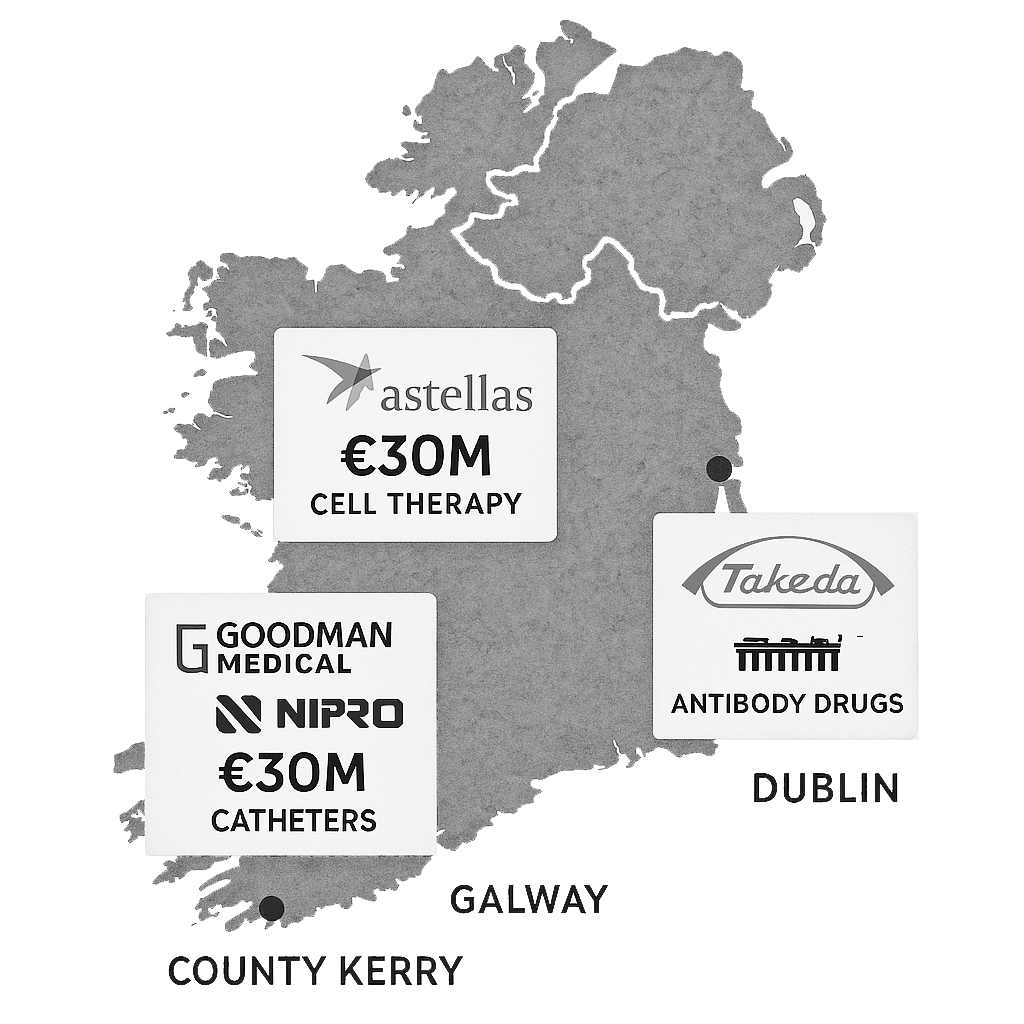
Asian investment underpins an increasing segment of this remarkable healthcare ecosystem. Amid the green fields of County Kerry in south-west Ireland, innovative antibody drugs are made at a €330 million state-of-the-art facility built by Astellas, the Japanese global pharmaceutical company.
Close to the ancient harbour at Galway on the west coast, world-leading catheter products used to fight cardiovascular diseases are produced by Goodman Medical, a ground-breaking company acquired in 2013 by Japanese medtech giant NIPRO, headquartered in Osaka. On the outskirts of Dublin, near to an airport serving 190 international destinations, Takeda, another Japanese global healthcare company, has built an innovative cell therapy production facility to supply markets including the European Union, the U.S. and Canada.
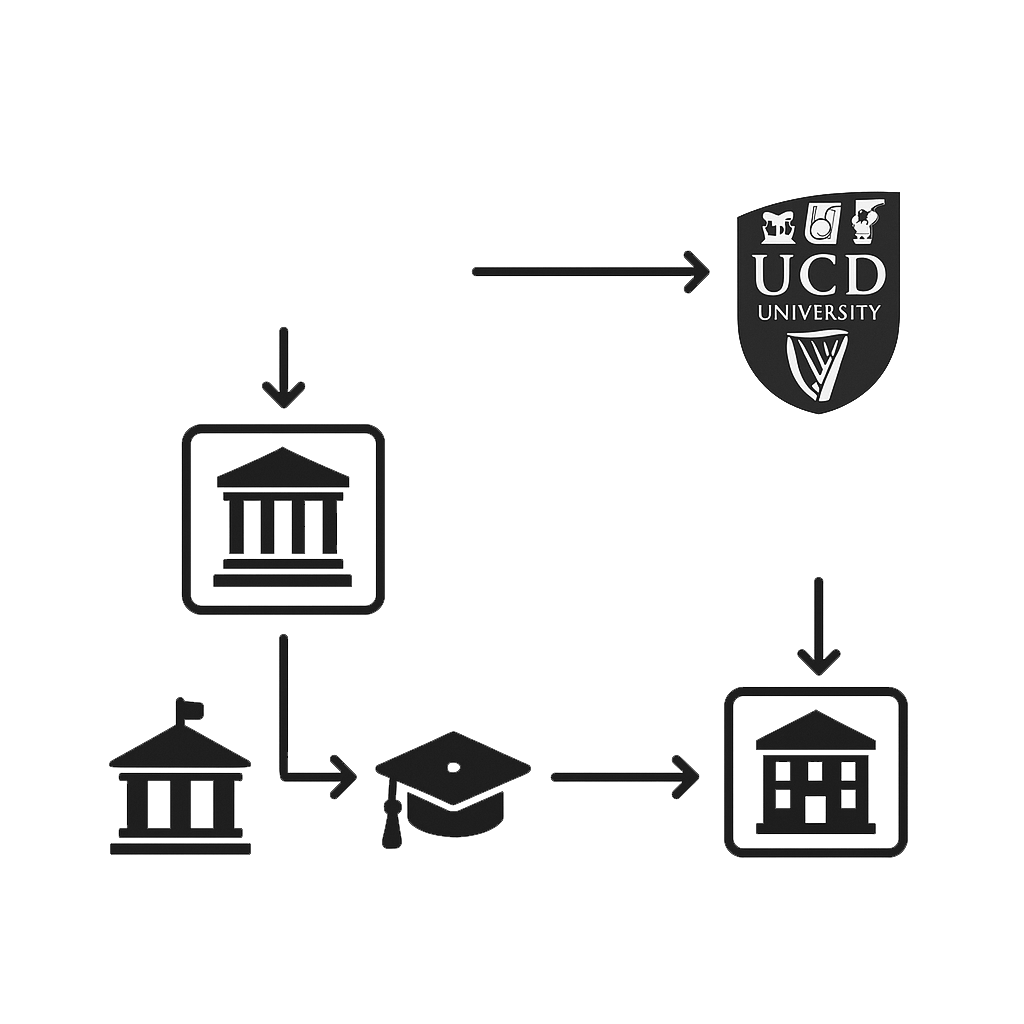
Companies in the life sciences sectors are attracted by Ireland’s determination to support innovation by establishing world-leading research facilities, such as the National Institute for Bioprocessing Research (NIBRT). The global centre of excellence for biopharmaceutical manufacturing, training and research was founded in 2007 through collaboration by the Irish Government through IDA Ireland and several higher education institutions. Situated close to University College Dublin, a world-class seat of learning, it replicates a modern bioprocessing plant and employs specialist researchers from around the world.
From Ireland to the world
Asian companies increasingly see Ireland, the main English-speaking country in the European Union, as a portal to Europe and other international markets. Bolstered by long-term politically stability and compliance with international tax standards, Ireland’s economy is expected to grow by 3.4% in 2025, according to the European Commission.
The trading relationship between Japan and Ireland dates back more than half a century to the opening of the Irish embassy in Tokyo in 1973, when IDA Ireland launched its first campaign to grow business links between the two island nations. Since then, 44 Japanese companies have located in Ireland, establishing 60 operations and employing 8,000 people.
Ireland’s commitment to helping businesses to innovate and improve themselves resonates with Japan’s “Kaizen” culture of continuous betterment. It is embodied in the Digital Manufacturing Ireland (DMI) initiative, another government-backed centre of excellence which is designed to support Irish manufacturers, including multinational businesses, to adopt transformative digital technologies.
Top tier talent
Ireland already has a phenomenal technology talent pool. Today, 13 of the world’s top 20 global technology companies have a presence in Ireland. They are among 1,800 multinational companies based in a country where one in five of the population was born overseas.
Datavant, a world-leading health data platform company, announced in 2025 that it was establishing its global R&D Centre in Galway after identifying Ireland as a gateway to the EU market. Datavant was attracted by Ireland’s technology talent pool and will be creating 125 jobs. Its first hire, Ciaran O’Toole, Datavant Vice-President Engineering and Galway Technical Lead, said the facility will have an international focus. “The software we will be building here in Galway will be solving real-world problems and directly impacting healthcare decision-making globally.”
Access to such diverse and specialised talent was a key attraction for Takeda in establishing so much of its global operation in Ireland. It is 28 years since the company set up in the coastal town of Bray, south of Dublin, and since then it has expanded to three more locations, employing more than 1,000 people and exporting medicines to 60 international markets.
Innovation has been essential for a company that is driven by R&D. With a focus on oncology, rare diseases and gastroenterology, Takeda’s mission is to advance the frontier of new treatment options. It is doing that in Ireland. It opened its new oncology production suite at Bray in 2020, and its innovative cell therapy production facility at Grange Castle, near Dublin, two years later. Takeda Ireland has been recognised for its innovation and operational excellence by the International Society for Pharmaceutical Engineering. It won top honours for overall excellence at Ireland’s Life Sciences Industry Awards 2025.
Takeda’s global manufacturing and supply officer, Thomas Wozniewski, said Ireland has become a crucial hub in the company’s global network. “Cell therapy facilities require a specialised set of skills and the talent base in Ireland is as important as other frame conditions like proximity to partners and an international airport.”
Astellas has made a similar commitment to Ireland as a gateway to global markets. It arrived in Kerry in 1990 and its recent expansion of its in-house production capabilities will enable it to supply high-quality medicines to treat patients around the world with conditions including prostate cancer and chronic kidney disease. The facility, due to open in 2028, will create 600 construction jobs and 100 specialised roles in engineering, science and technology.
Such investments are “an endorsement of Ireland’s reputation as a global centre of excellence in life sciences”, says Michael Lohan, CEO of IDA Ireland. “With its well-established talent base, robust infrastructure and pro-business environment, Ireland continues to attract strategic investments from world-leading companies.”
In Galway, NIPRO’s operations combine the best of Japanese and Irish working cultures and prioritise shared values such as loyalty, trust and respect for the workforce. Many of the catheters produced by Goodman Medical at its Mervue Business Park location are exported back to the Japanese market.
SK biotek became the first Korean pharma company to invest in Ireland when it acquired a pharmaceuticals manufacturing campus at Swords, County Dublin, in 2018. The top 100 Fortune 500 global company, now known as SK pharmteco, chose the location because of Ireland’s specialist talent pool and its position at the forefront of global excellence within the pharma manufacturing sector. It has since announced a €30 million plan to expand operations in Ireland.
Creating success from �shared values
Asian companies investing in Ireland understand that their efforts to innovate and grow will receive full support from the Irish government. IDA Ireland, which has been operating for 75 years, provides a concierge service to investors, including introductions to government bodies, regulators and tax professionals. It sets up meetings with industry peer companies and arranges site visits at locations that are primed and ready for companies to begin operations.
IRELAND'S INNOVATION ECHOSYSTEM
Government
Academia
K-NIBRT
South Korea
NIBRT
University
College
Dublin


JAPAN-IRELAND
BUSINESS RELATIONS
1973
Embassy of Japan opens
8000
Employees
44
Japaneese companies present in Ireland
County Kerry
Gallway
Dublin
Something about
Ireland's
Global
Business
Connections
Asian Investment in Ireland
Talent & Workforce
9
pharmaceutical companies have operations in Ireland

14 out of 15

Today, 13 of the world’s top 20 global technology companies have a presence in Ireland

1,800
multinational companies based in the country

leading global biopharmaceutical companies
13 out of 15
is a prime example of Ireland’s belief in the importance of collaboration between industry, government and academia


NIBRT
15
world's largest medical technology companies have operations in Ireland


Ireland’s commitment to fostering innovation and collaboration places us at the forefront of global healthcare transformation
— Rachel Shelly, Global Head of Life Sciences at IDA Ireland
Ireland continues to be a stable, secure and pro-enterprise environment with the talent, track record and regulatory and innovation capabilities to enable global life sciences companies to thrive
— Rory Mullen, Global Head of Biopharma at IDA Ireland


“Ireland’s commitment to fostering innovation and collaboration places us at the forefront of global healthcare transformation,” says Rachel Shelly, Global Head of Life Sciences at IDA Ireland. “By connecting world-class talent with leading-edge research and industry, we are not only advancing new therapies and technologies but also ensuring that the breakthroughs made here will benefit patients and communities across the world for generations to come.”
NIBRT is a prime example of Ireland’s belief in the importance of collaboration between industry, government and academia. In Songdo, South Korea, IDA Ireland is promoting the K-NIBRT, a Korean version of the Dublin institute that will foster bio talent locally.
"Ireland continues to be a stable, secure and pro-enterprise environment with the talent, track record and regulatory and innovation capabilities to enable global life sciences companies to thrive,” says Rory Mullen, Global Head of Biopharma at IDA Ireland. “Scientific discovery and advanced technologies alongside global collaboration are unlocking therapies of the future and Ireland stands at the forefront of this progress, positioned to help shape a healthier future.”
This is why Ireland is a place where the future of health will be invented. It is where new medicines and medical technologies will be developed. And from here they will be exported to global markets, and the lives of patients around the world will be saved.
10
of
the
top
14
of the top
