This advertiser content has been created and paid for by KPMG. Neither Reuters News nor Reuters Plus, the brand marketing studio of Reuters, were involved/had a role in the production of this content.

Produced by Reuters Plus for

Disclaimer: The Reuters news staff had no role in the production of this content.
It was created by Reuters Plus, the brand marketing studio of Reuters. To work with Reuters Plus, contact us here.


Sanjit Biswas
CEO and co-founder of Samsara

Smarter Holiday Logistics:
How AI Supports Frontline Workers During Peak Season
Mitigating Safety and Weather Risks
Blizzards, ice storms, and other severe weather often complicate last-mile deliveries during the holiday season. A new Samsara analysis of anonymized operational data across billions of miles finds that crashes per mile increase in the winter, with drivers experiencing 7% more crashes per 1 million miles. Shorter winter days add another challenge: more driving in the dark. In fact, the same report shows that more than 50% of crashes occur at night, when black ice, darkness, and fatigue take hold.
�
Reducing Cargo Theft
In the U.S. alone, businesses lose up to $35 billion each year to cargo theft. Tech-enabled, organized theft tends to surge during the holiday rush, when more high-value retail goods move through the supply chain. “Cargo theft is no longer a traditional smash-and-grab effort,” says Janelle Griffith, North American Logistics Practice Leader at Marsh, a global insurance broker and risk advisory firm. “It’s planned, orchestrated, and carried out by tech-enabled theft rings — and this type of activity is, unfortunately, on the rise.”
�To combat cargo theft, companies are turning to AI-driven tools that deliver real-time fleet visibility and actionable alerts. Supervisors can use AI intelligence to detect anomalies, such as a vehicle that stops unexpectedly, and trigger automated responses. “These additional layers of insight help to remove uncertainty and reduce insurance costs,” Griffith says. “AI brings more and better data to the table for underwriters. The better the data we get, the more we can use it to secure better rates for clients.”��
Driving Smarter Holiday Logistics with AI Tools
AI and machine learning are helping companies create safer, smarter and more agile supply chain operations during the holiday season and beyond. Real-time asset tracking combined with intelligent analytics gives stakeholders a clear, up-to-date view of inventory movement and improves demand forecasting.
�At UNFI, AI is making a significant impact. “It helps us position inventory more accurately across our entire network,” Chadwick says. “It also lets us align labor needs with operational demands, which means fewer last-minute staffing crunches, less overtime and less fatigue. It’s a smart way for us to protect our teams.”
�Across logistics operations, AI helps identify risks and improve outcomes. “Gathering logistics data used to be a pen-and-paper kind of process,” Biswas says. “Now, we have cameras that run AI risk models at the edge and in the cloud.” Fleets that implemented Samsara’s complete AI safety solution, including dash cams and in-cab alerts, achieved an aggregate 73% reduction in crash rates over 30 months, according to company data. “All of this is unlocked by new technology advancements,” Biswas says. “That’s why leaders need to consider how AI can help solve some of their toughest challenges.” ��


The holiday season is a perfect storm of logistical challenges. From staffing frontline teams to protecting drivers in extreme weather, meeting customer expectations during peak season presents significant obstacles. Increasingly, companies are turning to emerging technologies such as AI-powered safety solutions to support frontline employees and mitigate risk. “These organizations are using AI tools to keep frontline workers trained and safe, to simplify workloads and reduce risk,” says Sanjit Biswas, CEO and co-founder of Samsara, a leading AI company providing actionable insights to physical operations organizations. “The goal is to make jobs better and safer for workers, while also getting the work done.”
Facing Peak Season Labor Challenges
�Hiring and retaining enough workers to process and deliver goods during the holiday rush has never been easy. “These are really challenging, physically intense jobs, especially during rush season,” Biswas says. Nearly 50,000 drivers have left the industry from 2022 highs, according estimates from the American Trucking Association. “It's not surprising that in today's labor market — where it's pretty tight — there's turnover and that results in challenges,” Biswas says.
�Across frontline industries, companies are looking for ways to train and support employees so they can work safely — and to ease the burden on drivers who are already stretched thin. One approach, says Tehzin Chadwick, SVP Safety at UNFI, a large natural and organic food distributor that supplies Whole Foods Market and other U.S. chains, is to start seasonal hiring earlier. “That extra time lets us fully integrate new employees into our safety culture before things get really busy,” Chadwick explains. UNFI’s goal is to build a stable, cross-trained team that can adapt quickly to changing demands during peak seasons.
�The company is using AI-powered tools to personalize onboarding and recommend learning pathways for new associates. “Using technology in this way accelerates skill building and creates a sense of opportunity and belonging that helps us stand out,” Chadwick says.
These organizations are using AI tools to keep frontline workers trained and safe,
to simplify workloads and reduce risk


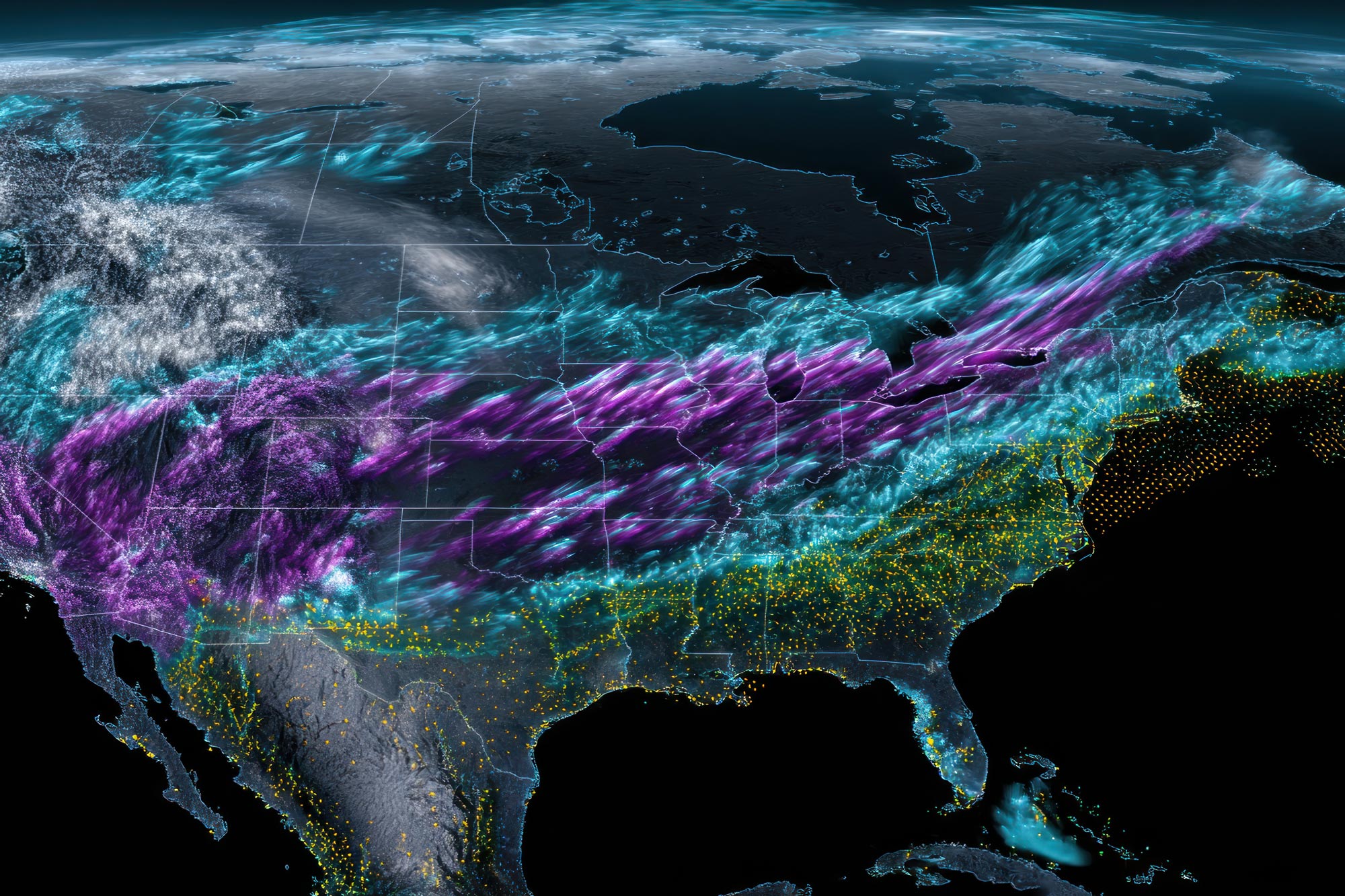

When traffic and weather risks are at their highest, companies must find ways to keep drivers informed. Modern telematics systems can deliver real-time alerts, while dispatchers and supervisors monitor conditions with live fleet maps that include weather overlays. Equipped with these tools, dispatchers can quickly identify which drivers might be affected and make rerouting and scheduling adjustments as needed.
�For example, using a vehicle telematics system powered by Samsara, UNFI’s drivers receive in-cab alerts from Samsara cameras about hazardous conditions. “Weather monitoring tools are built into the system, and from a safety perspective, that’s a game changer,” Chadwick says. “It gives drivers the information they need in the moment to respond safely and confidently.”
�In the past, it wasn’t possible to assess weather risk at such a granular level. Today, AI-powered video technology is changing that. In-cab monitors provide insights into risky driver behavior, while AI dash cams can capture real-time data about road conditions at each driver’s location. AI systems can also analyze weather conditions at scale and send automated alerts to keep drivers informed. “Using AI to keep drivers alert and aware of their surroundings makes a real, practical difference in safety,” Biswas says. �

See how AI is helping the world of physical operations become smarter


See how AI is helping the world of physical operations become smarter