Disclaimer: The Reuters news staff had no role in the production of this content. It was created by Reuters Plus, the brand marketing studio of Reuters. To work with Reuters Plus, contact us here.


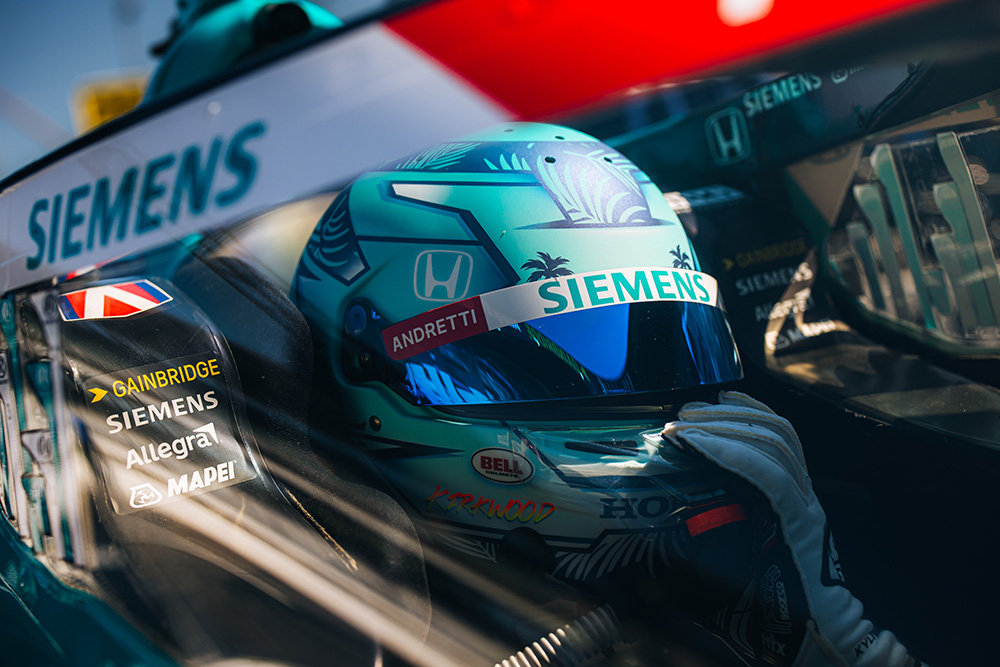
More than a million racing fans worldwide watched Andretti Global driver Kyle Kirkwood win three races during the 2025 NTT INDYCAR SERIES — but how many viewers knew he had already won those races thousands of times before his tires even touched the track?
Open-wheel racing is an intense sport that demands continuous innovation in the car’s design and construction, with strict regulations and zero margin for error. Kirkwood’s Indianapolis-based Andretti Global team competes nearly every weekend during the annual INDYCAR season (March–August), leaving a scant few days between races to effect any changes to the cars that could shave crucial seconds off the drivers’ times and result in more wins.
How is it physically possible, in that narrow interval, to work with the necessary precision on performance-critical car parts? The solution lies not in the physical realm but in the virtual one, says Dave Taylor, VP of Industry Strategy at Siemens Digital Industries, Andretti Global’s software technology partner, whose Siemens Xcelerator platform provides an integrated digital environment for the design, simulation and real-time build of Kirkwood’s No. 27 Honda.
The Reuters news staff had no role in the production of this content. It was created by Reuters Plus, the brand marketing studio of Reuters.

Produced by Reuters Plus for Siemens

The algorithm that drives 230 mph
For driver Kyle Kirkwood, victory on the track starts with virtual simulation in the laboratory.

From track to feedback in milliseconds
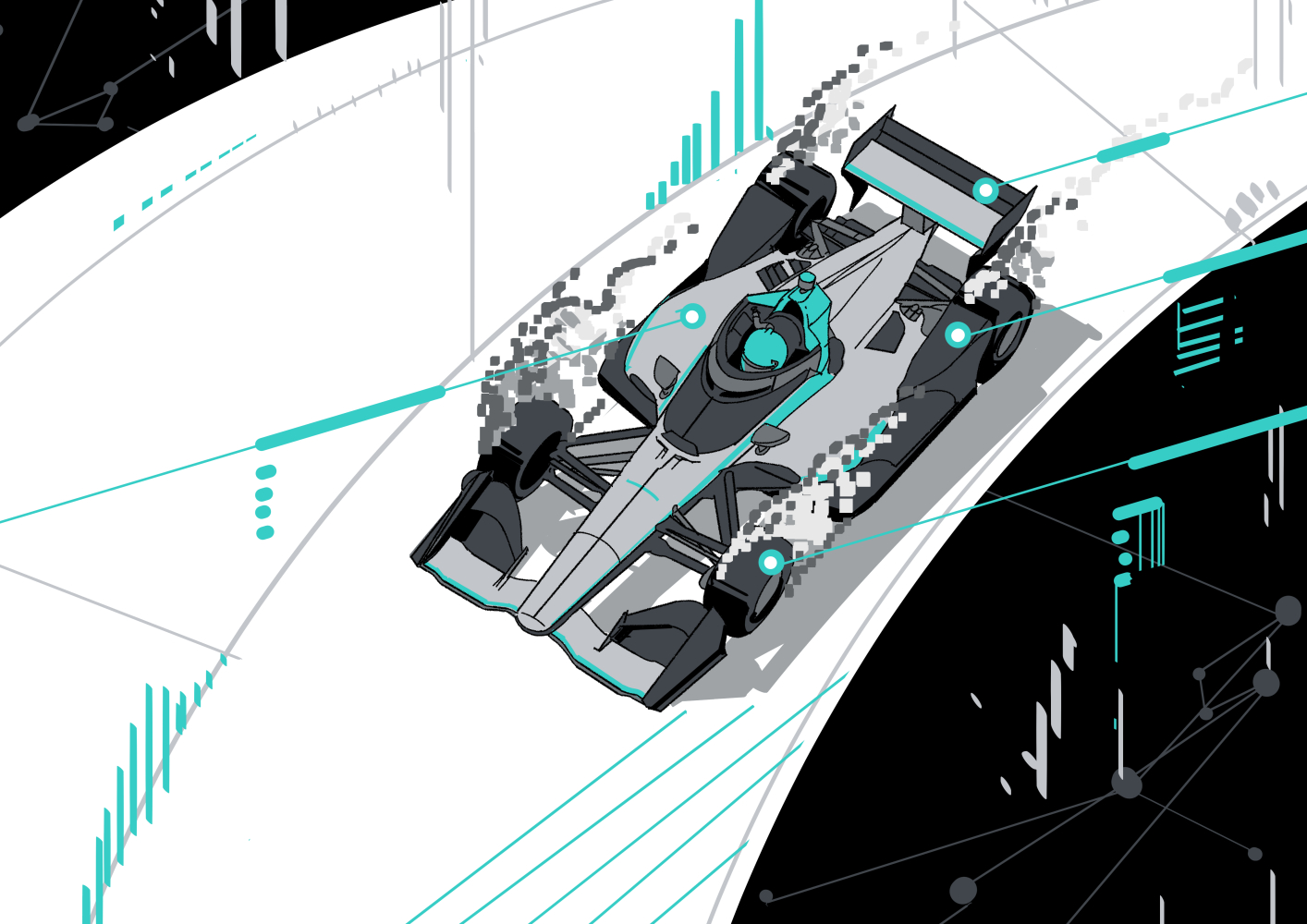
Digital simulations have transformed the development process and, consequently, the sport itself: Instead of engineers having to build, adjust and test physical prototypes repeatedly, a digital twin of the car is created in a laboratory. It allows for the time-saving creation of countless race scenarios in a virtual world, where every crash or mishap is translated into data — and a competitive advantage — using a digital twin.
The digital twin in this case is “a highly accurate representation of the physical vehicle that understands the properties of every material in it. We use it to simulate and predict every aspect of the car’s performance,” Taylor explains. It enables unlimited testing scenarios and performance optimization before physical production begins. These fast virtual iterations make a big difference to the team, he says. “That’s where a lot of the value is for them.”
Whatever Kirkwood experiences on the track, he relays to the Andretti engineers. “Kyle might say, ‘The suspension is not performing well on this kind of turn.’” The engineers take that feedback, use the software to simulate his experience, then adjust the suspension accordingly to see if it performs better on the track the following weekend.
�If done physically, Taylor says, this cycle would take “weeks or even months, whereas a digital twin can do numerous iterations in just a day or two, and get to a better answer.”
“...a digital twin can do numerous iterations in just a day or two, and get to a better answer.”
Accelerating industry
companies have already adopted digital twin technologies as the solution, drawing attention to a market that’s predicted to achieve 60% annual growth between now and 2030, reaching $73.5 billion in value by 2027.
Asked what broad industry challenges the technology can resolve, Taylor �uses the example of organizations working in silos, rather than using a platform �that lets different disciplines work in an environment where they can simulate everything using a single software solution.
“When companies start to connect all the pieces across silos, they can get a better result, and faster. Unless you’re able to simulate the whole thing, the integration between those different systems becomes a bigger problem.
“That’s one of the biggest challenges. You don’t see the integration problems until you put all the parts together on the end product.”
Half the time, twice the precision
For Andretti Global, the virtual simulation and rapid multi-iteration process has reduced development time by 50% while simultaneously improving performance accuracy. “The team has been evolving what they do in engineering [at the same pace] as our tool set has evolved,” Taylor says. “Now, the platform is so robust they can do more with it.”
Toward the industrial metaverse
As for the future, Taylor cites “two really big things happening in industry that will change the landscape.” First, being able to put a digital twin into an industrial metaverse environment so that organizations can “go even further in simulating the real world in a virtual environment” is an exciting concept to him. Second, industrial AI will transform everything, including the speed at which companies can start to iterate on designs, or create an initial design based on digitally stored company knowledge.
“Organizations that embrace these concepts will visibly leap forward in terms of their performance. The good thing about Andretti is they’re already at the forefront of what we are doing,” Taylor says. “As we continue to evolve, they’re going to be right there with us at the leading edge.”
“
”
So much more than a tech upgrade, the use of a digital twin is a fundamental reimagining of how high-performance organizations operate in an era where the fastest iteration wins.
Dave Taylor, VP of Industry Strategy at
Siemens Digital Industries



Take a deeper dive into digital twin technology here

KYLE KIRKWOOD
NTT INDYCAR SERIES
Driver of the No. 27 Andretti Honda,
Andretti Global

What Andretti Global has discovered in the crucible of 230 mph competition offers a blueprint for any enterprise tackling the same underlying challenge: how to innovate faster while minimizing risk and cost. Some 75% of advanced manufacturing companies have already adopted digital twin technologies as the solution, drawing attention to a market that’s predicted to achieve 60% annual growth between now and 2030, reaching $73.5 billion in value by 2027.

Learn more about holistic industry solutions with Siemens Xcelerator Marketplace
Learn more about Siemens Xcelerator’s portfolio

Take a deeper dive into digital twin technology

Find out more
Disclaimer: The Reuters news staff had no role in the production of this content. It was created by Reuters Plus, the brand marketing studio of Reuters. To work with Reuters Plus, contact us here.

More than a million racing fans worldwide watched championship driver Kyle Kirkwood win three races during the 2025 IndyCar Series — but how many viewers knew he had already won those races thousands of times before his tires even touched the track?
Open-wheel racing is an intense sport that demands continuous innovation in the car’s design and construction, with strict regulations and zero margin for error. Kirkwood’s Indianapolis-based Andretti Global team competes every weekend during the annual IndyCar season (March-August), leaving a scant few days between races to effect any changes to the cars that could shave crucial seconds off the drivers’ times and result in more wins.
How is it physically possible, in that narrow interval, to work with the necessary precision on performance-critical car parts? The solution lies not in the physical realm but in the virtual one, says Dave Taylor, VP of Industry Strategy at Siemens Digital Industries, Andretti Global’s software technology partner, whose Siemens Xcelerator platform provides an integrated digital environment for the design, simulation and real-time build of Kirkwood’s No. 27 car.
Caption: Lorem ipsum dolor sit amet, consectetur adipiscing elit. Aliquam viverra sem non urna suscipit auctor vitae sed magna. �
The Reuters news staff had no role in the production of this content. It was created by Reuters Plus, the brand marketing studio of Reuters.
Produced by Reuters Plus for Siemens
The algorithm that drives 230 mph
For driver Kyle Kirkwood, victory on the track starts with virtual simulation in the laboratory.
From track to feedback in milliseconds
Digital simulations have transformed the development process and, consequently, the sport itself: Instead of engineers having to build, adjust and test physical prototypes repeatedly, a digital twin of the car is created in a laboratory. It allows for the time-saving creation of countless race scenarios in a virtual world, where every crash or mishap is translated into data — and a competitive advantage — using a digital twin.
The digital twin in this case is “a highly accurate representation of the physical vehicle that understands the properties of every material in it. We use it to simulate and predict every aspect of the car’s performance,” Taylor explains. It enables unlimited testing scenarios and performance optimization before physical production begins. These fast virtual iterations make a big difference to the team, he says. “That’s where a lot of the value is for them.”
Whatever Kirkwood experiences on the track, he relays to the Andretti engineers. “Kyle might say, ‘The suspension is not performing well on this kind of turn.’” The engineers take that feedback, use the software to simulate his experience, then adjust the suspension accordingly to see if it performs better on the track the following weekend.
�If done physically, Taylor says, this cycle would take “weeks or even months, whereas a digital twin can do numerous iterations in just a day or two, and get to a better answer.”
“...a digital twin can do numerous iterations in just a day or two, and get to a better answer.”
Accelerating industry
companies have already adopted digital twin technologies as the solution, drawing attention to a market that’s predicted to achieve 60% annual growth between now and 2030, reaching $73.5 billion in value by 2027.
Asked what broad industry challenges the technology can resolve, Taylor �uses the example of organizations working in silos, rather than using a platform �that lets different disciplines work in an environment where they can simulate everything using a single software solution.
“When companies start to connect all the pieces across silos, they can get a better result, and faster. Unless you’re able to simulate the whole thing, the integration between those different systems becomes a bigger problem.
“That’s one of the biggest challenges. You don’t see the integration problems until you put all the parts together on the end product.”
Half the time, twice the precision
For Andretti Global, the virtual simulation and rapid multi-iteration process has reduced development time by 50% while simultaneously improving performance accuracy. “The team has been evolving what they do in engineering [at the same pace] as our tool set has evolved,” Taylor says. “Now, the platform is so robust they can do more with it.”
Towards the industrial metaverse
As for the future, Taylor cites “two really big things happening in industry that will change the landscape.” First, being able to put a digital twin into an industrial metaverse environment so that organizations can “go even further in simulating the real world in a virtual environment” is an exciting concept to him. Second, industrial AI,will transform everything, including the speed at which companies can start to iterate on designs, or create an initial design based on digitally stored company knowledge.
“Organizations that embrace these concepts will visibly leap forward in terms of their performance. The good thing about Andretti is they’re already at the forefront of what we are doing,” Taylor says. “As we continue to evolve, they’re going to be right there with us at the leading edge.”
“
”
So much more than a tech upgrade, the use of a digital twin is a fundamental reimagining of how high-performance organizations operate in an era where the fastest iteration wins.
50%
Dave Taylor, VP of Industry Strategy at Siemens Digital Industries,


Take a deeper dive into Digital �Twin technology here


KYLE KIRKWOOD
Driver of the No. 27 Siemens Honda, Andretti Global

What Andretti Global has discovered in the crucible of 230 mph competition offers a blueprint for any enterprise tackling the same underlying challenge: how to innovate faster while minimizing risk and cost. Some 75% of advanced manufacturing