
The Reuters news staff had no role in the production of this content. It was created by Reuters Plus, the brand marketing studio of Reuters.
Produced by Reuters Plus for

Disclaimer: The Reuters news staff had no role in the production of this content. It was created by Reuters Plus, the brand marketing studio of Reuters. To work with Reuters Plus, contact us here.



Qatar’s path to becoming a regional wealth hub
A profound realignment is underway in global finance. The largest intergenerational wealth transfer in history—an estimated US$83.5 trillion expected to pass from baby boomers to younger generations over the next 25 years—coincides with an unprecedented mobility of capital and talent. In 2024 alone, 142,000 millionaires relocated internationally, driven by a search for regulatory certainty, tax efficiency and quality of life.
Qatar’s financial strategy
Against this backdrop, jurisdictions are no longer competing solely on incentives, but on trust, stability and long-term relevance. Qatar has approached this moment with a deliberate strategy: to position its financial sector as a cornerstone of economic diversification and a platform for sustainable, knowledge-based growth. Anchored in the Third Financial Sector Strategic Plan, the Gulf State’s ambition is to develop a financial sector that sets the regional benchmark for innovation, efficiency and investor protection, while remaining firmly aligned with the broader objectives of Qatar National Vision 2030.
This is not a short-term play. It is a structural recalibration designed to deepen market and attract institutions and investors seeking resilience as much as opportunity. Recent developments across the region have reinforced the importance of this positioning, and Qatar's ability to maintain full operations and regulatory continuity has not gone unnoticed.
The role of QFC
Qatar Financial Centre overview
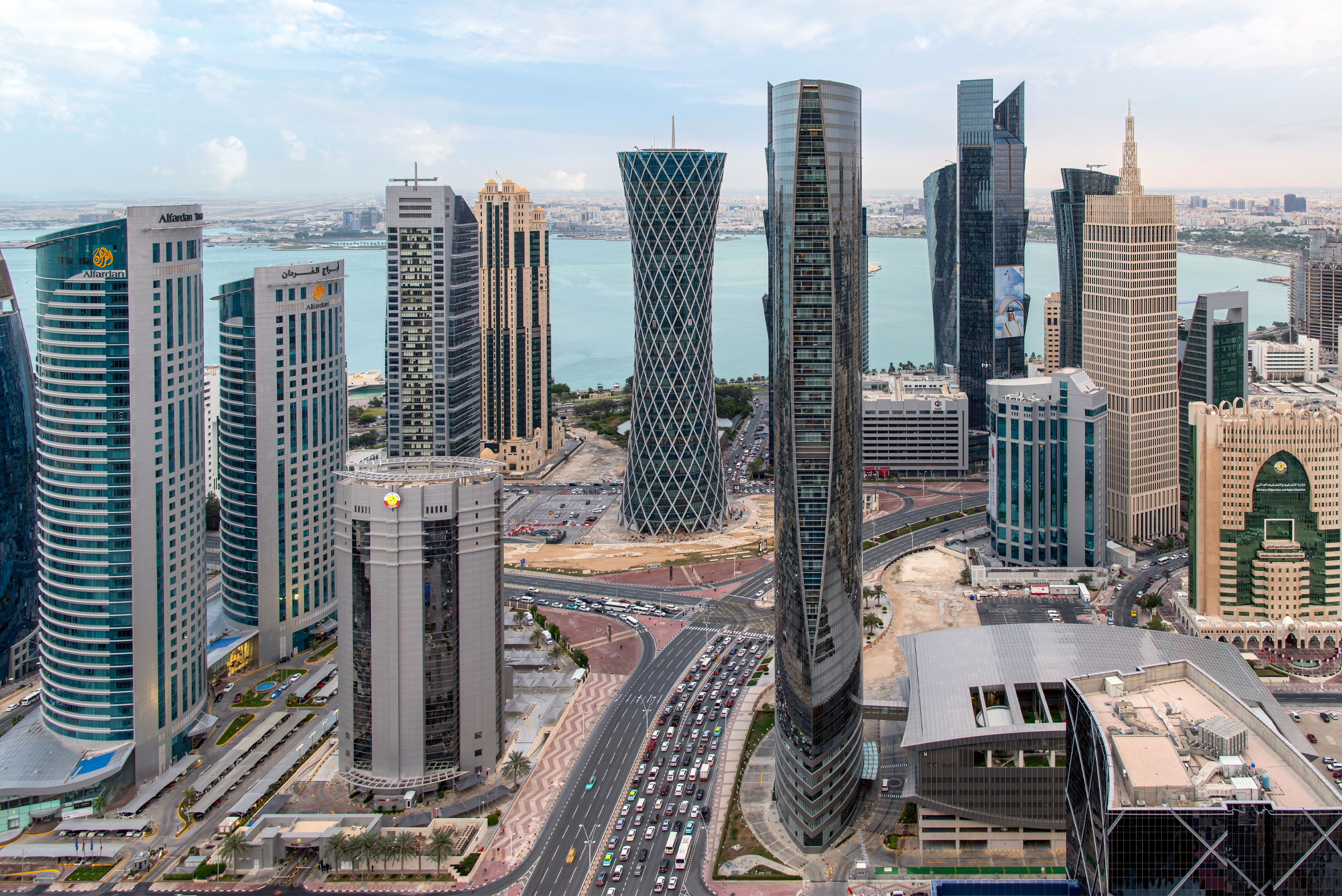
Central to this strategy is the Qatar Financial Centre (QFC), which serves as the country’s onshore financial and business centre and a key delivery arm of national financial sector ambitions. QFC’s role has been to translate strategy into execution through regulation that prioritises clarity, frameworks that enable innovation, and processes that reduce friction for firms entering and operating in the market.
QFC operates under a common law framework, permits 100% foreign ownership and allows unrestricted repatriation of profits in any currency. Its tax regime is intentionally straightforward: no personal income or wealth tax, and a 10% corporate tax applied only to locally sourced profits.
Equally important is structural flexibility. Firms operating through QFC can choose from a range of structures and undertake both regulated and non-regulated activities, including Limited Liability Companies, Special Purpose Companies, Foundations, and Single Family Offices, allowing them to align governance, risk and growth strategies with their specific mandates. Streamlined licensing processes, including QFC’s Elite Onboarding Service, further reinforce the proposition by enabling incorporation within one hour of final application.

QFC is Qatar’s onshore financial and business centre


Operates under a common law framework and permits 100% foreign ownership
No personal income tax and no wealth tax
Qatar’s financial sector today: scale, depth and momentum
These foundations are translating into measurable momentum. Qatar’s wealth management market is now valued at approximately US$30 billion, according to Ken Research, driven by growing demand for personalised financial services and sophisticated investment strategies. At the same time, the country is seeing rising institutional presence as financial services firms establish regional headquarters and expand operations.
The financial ecosystem itself has matured. Global banks and financial institutions, including JP Morgan Chase, Barclays, Deutsche Bank and Crédit Agricole, operate alongside investment advisers, asset managers and professional services firms, creating depth across the value chain.
Qatar is also reinforcing its position in Islamic finance, a sector projected to approach US$6 trillion globally by 2026. Established Islamic financial institutions operating in the country form part of a broad ecosystem that supports Sharia-compliant investment solutions for both regional and international clients—adding another dimension to Qatar’s wealth proposition.
The transition to wealth: positioning Qatar as a wealth hub
As global wealth becomes more mobile and more discerning, Qatar’s financial strategy is evolving to reflect a clear opportunity: to position itself as a wealth hub that combines regulatory strength with long-term stewardship.
Projections underscore the trajectory. By 2028, the number of high-net-worth individuals residing in Qatar is expected to reach 54,650, an increase of nearly 24% from 2024 levels. This growth reflects not only regional wealth creation, but also Qatar’s increasing appeal as a place to live, invest and manage assets.
Crucially, the focus is not on volume alone, but on quality: attracting long-term wealth, well-structured vehicles and institutions aligned with sustainable growth.
Why Qatar and QFC are ready
What distinguishes Qatar at this juncture is readiness. The regulatory architecture is firmly established. The ecosystem has reached sufficient scale and sophistication. And the market has demonstrated a consistent ability to attract both institutions and individuals seeking certainty in an increasingly fragmented global environment.
For firms operating in the market, this readiness is tangible. As one fund manager noted, Qatar offers a combination of infrastructure, transparency and connectivity that makes it a highly conducive base for regional and global operations. Others point to the responsiveness of institutions such as the QFC, and the partnership-driven approach to market entry and expansion.
“We chose Qatar to headquarter our fund because of its strong infrastructure and supportive regulatory environment,” said Michael Lints, partner at Golden Gate Ventures, an early-stage venture capital fund. “The common law framework for fund managers, transparency for entrepreneurs, and excellent connectivity through the airport make it a highly conducive place to work. Moving my family here was also an easy decision, given the lifestyle and opportunities Qatar offers.”
We chose Qatar to headquarter our fund because of its strong infrastructure and supportive regulatory environment
Michael Lints, partner at Golden Gate Ventures
Dr Haniza Yon, CEO of GFI FinTech, highlighted a different aspect of Qatar’s business environment: the level of support she received when setting up her international business, saying, “QFC facilitated our engagement with potential market players, and we are excited to grow our business here in Qatar and beyond.”
The global movement of capital and talent is accelerating, shaped by generational change, technological progress and shifting expectations around governance and sustainability. Qatar is responding by offering a proposition grounded not in rhetoric, but in execution: a secure, well-regulated environment for wealth preservation and growth.
For an increasing number of HNWIs, private wealth firms and institutions, this proposition is no longer theoretical, it is being realised in practice.

Qatar Financial Centre
We are a leading onshore business and financial centre located in Doha, welcoming international and local companies seeking to set up business and grow with confidence in Qatar.
Read more


Qatar's venture�capital moment
More like this:
