The Reuters news staff had no role in the production of this content. It was created by Reuters Plus, the brand marketing studio of Reuters.

Produced by Reuters Plus for


On the Road
On the Road provides business insights and thought-provoking takeaways at key corporate conferences.
The AI Summit New York 2025

As AI automates tasks, how will job roles evolve? EY addresses the challenge of preparing your team for the future at The AI Summit NY 2025.
The AI Summit New York 2025
LEARN MORE


Featured articles

EY AI Insights
EY.ai Value Blueprints
LEARN MORE

Unchanneled worker enthusiasm squanders agentic AI’s promise
LEARN MORE

Disclaimer: The Reuters news staff had no role in the production of this content.
It was created by Reuters Plus, the brand marketing studio of Reuters. To work with Reuters Plus, contact us here.
Watch more from On the Road


RSA Conference 2025
SXSW 2025

CES 2025
Watch insights on how organizations can cultivate a culture of cyber awareness live from RSAC 2025 in San Francisco.
RSA Conference 2025
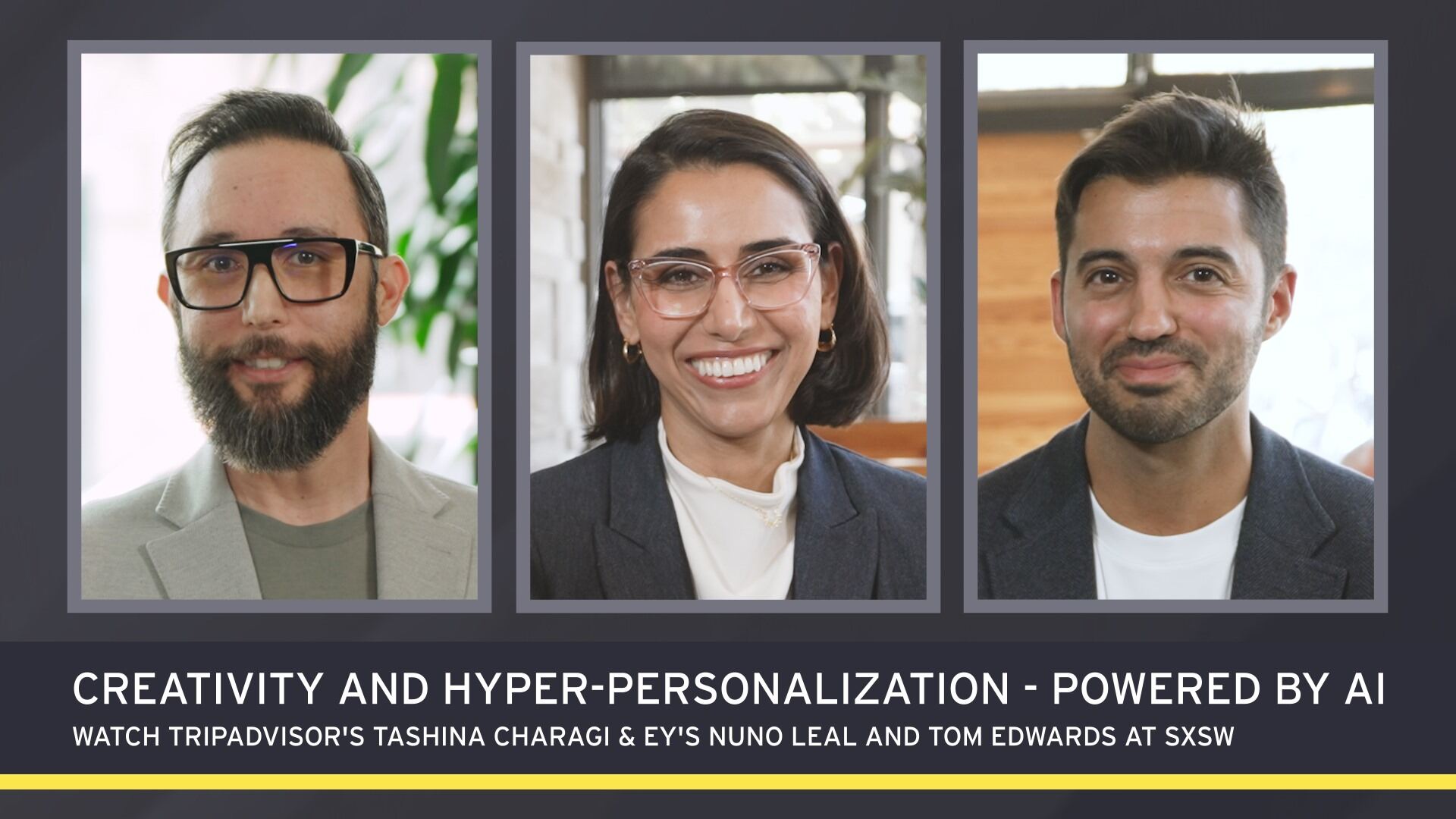
How can Generative AI use data insight for a personalized customer experience? Watch insights from SXSW 2025 in Austin, Texas.
SXSW 2025
How have AI applications advanced in one year? Watch insights from CES 2025 in Las Vegas.
CES 2025
More from On the Road
The AI Summit New York 2024
RSA Conference 2024
SXSW 2024

Watch how EY's 'proof not promises' approach is key to building up crucial AI skills.
The AI Summit New York 2024

Companies need to consider generational preferences when working with new tech. Watch now.
RSA Conference 2024

AI is helping creative industries innovate how they produce, distribute and market their products and content. Learn more about using AI at every stage.
SXSW 2024
MWC: AI and Ethics 2024
MWC 2024
CES 2024

Understanding the importance of different perspectives is crucial in building AI systems. Learn more about how businesses can address the biggest risks.
MWC: AI and Ethics 2024

Discussions highlight the rapid pivot from networking and telco to what's next. �See what's trending.
MWC 2024

90% of CPG and retail executives will further invest in their AI applications in 2024. Watch to learn more.
CES 2024
As more employees and consumers use AI, businesses have the opportunity to drive value from its applications.
The AI Summit New York 2023
The AI Summit New York 2023


How to leverage GenAI for enhanced customer engagement

LEARN MORE
Eight takeaways on data and transformation for CIOs

LEARN MORE
Execs double down on AI: explore 5 AI adoption strategies for success

LEARN MORE
How organizations can stop skyrocketing AI use from fueling anxiety

LEARN MORE
Eight takeaways on data and transformation for CIOs
LEARN MORE
How organizations can stop skyrocketing AI use from fueling anxiety
LEARN MORE
Eight takeaways on data and transformation for CIOs
LEARN MORE
7 ways to unleash value and drive growth from your MarTech and teams

LEARN MORE
5 ways CMOs can create an agile operating model for sustainable growth

LEARN MORE
Cybersecurity solutions for a data-driven future

LEARN MORE
How a consumer giant bridged the gap between cyber and business operations

LEARN MORE
Cyber study: How the C-suite disconnect is leaving organizations exposed

LEARN MORE
Why autonomous AI “agents” will be so important to your business

LEARN MORE
How to implement generative AI for 400,000 employees

LEARN MORE
Addressing AI risks: Preventing bias and achieving ethical AI use

LEARN MORE
How does marketing adapt when AI gives your product a personality?

LEARN MORE
How to leverage GenAI for enhanced customer engagement

LEARN MORE
How one health care testing company gets results with AI

LEARN MORE
Cybersecurity solutions for a data-driven future
LEARN MORE
How a consumer giant bridged the gap between cyber and business operations
LEARN MORE
Cyber study: How the C-suite disconnect is leaving organizations exposed
LEARN MORE
Discover CES 2026's breakthrough insights on physical AI and energy innovation driving tomorrow's competitive edge. Watch now.
CES 2026

The AI Summit New York 2025
EY AI Insights
LEARN MORE
EY.ai Value Blueprints
LEARN MORE
The dividend age: How AI is turning promise into payoff

LEARN MORE

SXSW 2026

How organizations can stop skyrocketing AI use from fueling anxiety
LEARN MORE
Eight takeaways on data and transformation for CIOs
LEARN MORE
How organizations can stop skyrocketing AI use from fueling anxiety
LEARN MORE
Eight takeaways on data and transformation for CIOs
LEARN MORE
Why aligning human and machine rhythms is key to AI success

LEARN MORE
Clarify your AI strategy: modernization, innovation and transformation
LEARN MORE
Local data centers: �the key to speed and compliance in business
LEARN MORE
AI operates at machine speed, but successful purchase decisions require human tempo. Full SXSW 2026 insights here.
SXSW 2026
CES 2026



How do you build a security roadmap for a shifting AI terrain?
LEARN MORE

How to reimagine cybersecurity in �the age of AI
LEARN MORE

How to turn AI into a catalyst for innovation in cybersecurity
LEARN MORE
At RSA 2026, leaders discuss why trust is the new currency for AI and how organizations can build AI systems with confidence. Watch now.
RSA 2026
Show Transcript

Welcome to On the Road at the RSA Conference in San Francisco. When AI can be both your greatest defense �and your biggest vulnerability, how do security leaders navigate the future? Here's what they told us.
Trust is a big part of the conversation among EY leaders and others when it comes to AI. Why is that such a critical concept for organizations at RSA? Security is no longer just a tech issue. It's a trust issue. As AI is becoming more complex, it is executing on your decisions. It is patching systems and it's moving your money. 2026 is a year where our clients are looking to become AI-native. You cannot get to that level of efficiency if you don't have trust in the system. Trust is so critical. It is the new currency for us. It is so important to us that trust isn't just process and controls. It is a layer that includes resilience as well as culture. EY's cybersecurity study found only 20 percent of organizations have fully embedded AI governance into their culture. What's at stake for the other 80%? The 80% who are not looking at having that trust layer is going to also wake up realizing that they're left behind. And having the right trust layer in AI governance, starting from now, is going to give them a transformational roadmap so that when the time comes, they can evolve into a world that we believe is potentially one knowledge worker plus 20 or 30 AI systems.
As AI becomes more embedded in security operations, what will it take for organizations to truly trust the systems defending them? I think there's a lot of work and a lot of thought that's going to be put into that as we continue to adopt AI. How do we trust it from an operations perspective? How do trust it, from a management and leadership perspective? And how do we, trust it form a regulatory perspective? Can management defend the decision that the AI made? And then can we defend those decisions to satisfy an audit or a regulatory compliance? These are all varying levels of trust that we need to work through. To be able to truly trust. Manufacturing is now one of the most targeted sectors globally. CrowdStrike found attacks surged over 50% last year. How should cybersecurity evolve as IT and OT environments converge? �At Mondelez, we're producing snacks around the world, so it's important that as we develop AI agents and we step into this space, we're incorporating our legal and privacy and all the different teams that are needed at the table to ensure that we're doing what's right as we adopt AI. So working with partners like EY gives us the opportunity to see more of that landscape and what that looks like and how that's worked for other organizations and be able to move faster and adopt quicker. What does it mean to be a successful CISO these days? To be successful in security these days, we oftentimes deal with things on the worst days of people's lives, is the worst times of an organization when things are going wrong. So it's important to maintain our calm in the storm and be prepared and have strong process and resilience when those things happen.
Thanks so much for your time. What are the biggest shifts in the threat landscape you're seeing at the conference this year? It's no surprise, agentic AI is all over the place. How does agentic help from an offense standpoint, from a defense standpoint? What do we need to do to be ready for this new threat landscape of all the agents being released? So that's been one big theme that I've been saying. How is agentic AI changing the cyber security playbook? Any good technology has both an offense and a defense. Phishing had less than 10% hit rate before. �Now it's almost close to 50% hit rate when an email is crafted with some kind of an agentic AI module. Because they take into context where you are, what are you doing, who are your vendor partners, all of that. They do all that research, and then they give you a well-crafted email. And we want to make sure we're building those defensive technologies which can go help us defend against those kind of very much targeted spear phishing attacks that's coming in. What we are building within AI is like the trust layer. So these agents go from being a proof of concept implementation to actually being a scalable adoption. Ganesh, thanks so much for talking with us. Thank you so much, Alison.
How do you balance the urgent need to deploy AI defenses with making sure that it's used as ethical and compliant? I think a lot of companies think that there's a key trade-off, speed versus safety, and it's really both. This is where you link your cybersecurity strategy with your governance and risk management to make sure it's fit for purpose. A lot of our board members are asking three key questions. �What's the risk of doing AI? What's a risk of not doing AI, and also, are we getting the right ROI for our AI transformational investments? Without right AI governance, you're not going to be able to answer any of the three questions. So great talking with you. Thank you.
This has been On the Road at the RSA Conference in San Francisco. Join us again from business events throughout the year.
RSA 2026
Show Transcript
As AI continues to evolve, it's shaping how brands create, connect, and show up for customers in real time. �We're here at South by Southwest with what you need to know.
�John, what stands out to you this year about AI's evolving role for consumer brands? I think the difference now with customer experience is that AI can move at the speed of machines, yet humans still need to be thoughtful about what it is they're deciding to do. And so this concept that we've been articulating, we call it the human tempo. And while speed is still important, it's not the whole story. Now it's speed plus human consideration, human involvement, human intuition when making a purchase decision. And then allowing the AI to enable that purchase. Do you have an example or experience where aligning an AI solution with human tempo had an impact on customer experience or business outcomes? So an example would be when you're online shopping and you're ready to check out. Imagine that it's auto-subscribing you to the newsletter and putting you in the loyalty program, and it's telling you how it's gonna ship it to you rather than giving you that decision. Rather than pausing and saying, hey, would you like to join the newsletter? Here's the value of that. So it's not actually giving you that moment of consequences, taking it away from you. And in that case, it erodes trust over time. What we're looking for is what we call creating agency, which is a system provides information. A human digests that information, makes a decision, and then the system reacts, rather than reacting before the human was even involved.
Tomasso, there's a strong creative and innovative community here at South by Southwest. How can AI enhance human creativity and decision-making instead of replacing it? I do think that we're about to enter a new era where AI and creativity can really become one. Let me tell you a story. About a month ago, I had the first day where I felt like I was an AI agent manager. I was with a client and we wanted to start building something together using a team of agents. We started not by opening the laptop, but actually drawing on a whiteboard for hours, thinking about what is the problem that we are trying to solve and what are our ideas. Then we turn on the AI. And we translated those ideas into a prompt and then AI started executing on it for 20, 30 minutes. What happens in those 30 minutes is incredibly important. That sparked new conversations about what other new novel ideas can we bring to the table and by the time that our agents stopped running, we already knew what was next. This gives you a glimpse into ways of working of the future because as agents are getting our work done That's where our creativity our wisdom, our knowledge gets to thrive. What separates companies that successfully scale AI from those that remain stuck in experimentation? In order to go after growth, you need to have a reinvention mindset. Do not treat AI like a feature, like an add-on, but use AI to redesign an entire process to turn it into a value stream. Now all your end-to-end enterprise processes that are cross-functional can start working together with agents and people in the judgment seat to create transformational value.
You're here at South by Southwest, and I'm curious what you're hearing from creatives and companies when it comes to the challenges around AI. I think there's this assumption and expectation that we're no longer going to need creativity, but we actually need more of it. And that creative judgment, that human intent, that creativity is going to be so important for companies to differentiate themselves. Tell us about EY Studio Plus and the problem that it was built to solve. EY Studio Plus is focused on building experiences, services, and products that really help enable growth, loyalty, and productivity. There's a lot of excitement and buzz and good vibes, if you will, about AI, but there's a of uncertainty right now. A lot of companies are focusing on what tool to use, but we're helping our clients think about what experiences it should be enabling and also thinking about the value it's gonna bring to customers and companies. What's your advice to consumer facing companies embarking on AI transformations so they put humanity at the center and thrive in the long run? What I would say is the first thing is focus on the human experience, focus on your customer experience and figure out intentionally where you should put in checkpoints to get the customer involved and engaged in that experience. The next would be is really around being bold and not being bold for technical sake, but being bold in that pushing this idea of tempo, constantly testing how do you know this is working. And then figuring out how temple alignment drives that midterm and longterm loyalty is really important.Thanks so much for all of your analysis and great conversation. Thanks so. Thanks so much. Thank you.
Thanks for joining us at South by Southwest in Austin On the Road. We'll be back soon with more insights from business events �throughout the year.
Show Transcript
Welcome to On the Road. We're here at CES 2026 with business leaders shaping the future to find out �what key trends they're seeing. Here's their take.
Great to see you, Lokesh. CES is the premier showcase for exciting new consumer product innovations. What's caught your eye so far? There are three things that really catch my attention. Physical AI, using AI and moving it from where it is today to actually into robots, into the physical devices that are going to change the value chain and interact with real context. The second is about moving from the cloud to the edge, and it's all about edge AI. How do we distribute the load and move it away from the Cloud and into the products and into hands of the people that actually need it so we can get real-time responses? And the third big thing is about contextual AI. Long-term context being within these AI models. So I see these three being the buzzwords of this year, physical, edge, and contextual, long-terms contextual AI, coming together to really redefine what we can do with this technology. In consumer products, what is changing in the process for how these products are getting here to the floor at CES? Is AI accelerating the time to market? It's all about moving from time to market to time to scale. And that is a real shift that we're going to see happening this year. Moving from the lab to the main stage, moving from what's happening today around prototypes to what we can do for everybody involved at a scale level. How do you do that as a company? It's really about rethinking how you apply this technology and the capabilities that it brings to your organization. It's about taking the process, but thinking about the business. It's thinking about whole operating model together. So it's really that big shift from lab all the way to the main stage.
Thanks for joining us here at CES. I know you've walked the floor and you've had conversations, what has stood out to you? I think what's really interesting is there's such a disproportionate focus on the infrastructure, energy, everything that's needed to drive consumer electronics. Or in the case of my industry, which is industrials and energy, really how do you build AI into product versus bolding it on as an appendage? I see that everywhere here. Increased efficiency and saving money are two of the primary headlines around how AI is transforming companies. What should organizations be focused on? I think that cost savings and efficiency is a secondary benefit of AI. I think what we're really seeing, and you can see it here, is how do we use AI as a part of our growth agenda? We're really stepping back, taking an AI-first approach, and saying how do we build AI into our machinery so we can be much more productive, either by more quality output or by allowing our people to spend time doing things that they're really good at versus doing things a digital agent could do. The energy required to power AI systems continues to be a big concern. How do you see this evolving over the next year? So one of the things that's interesting here is just how many energy solutions are being showcased. And I think that's new. I think fixing the energy equation is one of biggest challenges we have. The investment companies years ago said the real money is in the infrastructure companies and the energy companies that are really what is powering the development of the data centers and our ability to use AI.
Amy, great to have you join us here at CES. There's always a lot of excitement around the mobility sector with all the innovative technology on display. What trends are you noticing? I would say this event is really about the way AI is shaping products, experiences, and operations. How is it reshaping the mobility ecosystem from OEM to aftermarket service providers in 2026 and beyond? Mobility, as we think about it, is so broad and the spectrum of mobility is really on display at CES this year. I'd say one of the things that I see in terms of the ecosystem is the level of collaboration that's required to deliver these services to consumers is substantial. It's a must-have, a table stakes to really figure out how to have strong collaboration, not just for your product, but for the data that goes behind the product as well as the experiences. And the interaction with the customers. What shift should consumers expect as AI continues to be incorporated into their experiences with the mobility ecosystem? When you look at some of the capabilities around heads-up displays, around AI cockpits, the things that they're going to be bringing to you are really going to change the way that you interact with the products themselves. You're not just purchasing a product, you're purchasing an experience, and an experience that lasts not just from the time that you buy, but through the full life cycle of the product. We hear mix with when it comes to delivering the value expected with successful AI adoption. How are successful companies driving tangible business outcomes? When you think about AI, it's not an add-on, it's a built-in capability, just like many others, as part of re-engineering. And the companies that are getting that right are driving successful outcomes.
Thanks for joining us at CES Las Vegas. Join us again for more insights from business events throughout the year.
Show Transcript
Hello and welcome to On The Road. I'm Alison Kosik and I am here at the AI Summit New York. �We're talking to industry leaders about their real-world impact of AI-driven change.
Well, it's great to see you here at the AI Summit in New York. What's next when it comes to AI transformation? And what should companies be thinking about? I think we've moved from use cases and experimentation to moving towards something that is more akin to scale. A lot of companies are still on that journey, but those that aren't continuing to commit capital and commit their leaders to the journey just aren't seeing the returns that the other companies are. How can organizations go beyond these incremental productivity gains? We have to move away from incremental. We have move away use cases. We have think about scale. At EY, we recently released EY.ai Value Blueprints. And these allow our clients to take an agentic first view of end-to-end processes, of their enterprise, of their organization, to unlock value like they've never been able to even think about and imagine. That's what's so exciting. What about responsible AI use? What changes have you seen in the last year? But I'm seeing the conversation move from just responsible AI to trusted AI. And I think the more AI moves from just being ethical and compliant to, hey, we have the right security. We have the right humans in the loop. We can trust the output, the outcomes. And that's where I think there's a huge unlock because you can go way faster if you have trust, not just responsible, AI. You need that at its core, but you also need a real trust environment to go faster.
Chris, I'm so glad that we can sit down together and talk here at the AI Summit in New York. Walk me through your role at Universal Destinations and Experiences. I'm the Chief Digital and Technology Officer at Universal Destination and Experiences. That is the Parks Resorts and the Consumer Products Division of NBCUniversal. Chris, you've just presented here at the AI Summit New York with all the different organizations showcasing the way they're implementing AI. How do you know where to place your focus at universal destinations and experiences? We're really outcome focused. So what I mean by that is we look for the business opportunity. We're exploring opportunities on the growth side of the business, the efficiency side of the business, and also how does AI transform how we build our immersive entertainment experiences around the world. We've heard from a number of leaders here at this event mention the importance of trust in implementing AI. How are you building that trust? So trust has always been a foundation of our relationship with our customers and our team members. And so I see it as an extension of that. I do think AI does raise the stakes on it. And so, I think we just have to be very, very diligent on making sure that we're being transparent about the use of it and what we're trying to do with it. And we're also giving team members and guests a way to either opt out of that or not be part of it as well. Talk me through how AI is incorporated into the guest experience. In the guest experience, a lot of it is around the generation of content. So it's about really getting us to the answer faster. We do have a few areas where we've used either advanced analytics or even forms of AI like machine learning to make processes faster like the arrival gates in Orlando are all based on facial recognition. Actually, that has been accepted really, really well by the guests. And our opt-outs rates have actually decreased since the implementation of that.
Matt, it's great to see you again. As we return here to the AI Summit New York for, what, the third year, what stands out to you about what you're seeing at the event compared to last year? You're right, this is our third time together here. We are three years into this gen AI journey and we continue to see an explosion of use. What's been interesting over the last six months or so is the adoption curve for enterprises has grown exponentially too. In our AI Pulse survey, 97% of senior business leaders are saying they're seeing real ROI at this point. Over 50% of those have actually said they're getting a creative financial impact from those investments. Agenic AI has certainly become one of the big buzzwords. What are you hearing about how organizations should be approaching AI agents alongside their current workforce? As we think about how AI is gonna reshape roles and free our people up, pretty soon we're gonna move to a new era where the agents will act with autonomy. They'll have agency. And at that point, the humans are gonna be freed up to be on the loop and be orchestrating what's happening. This will be game-changing for every sector and every client. And you're gonna have to revamp the entirety of your work and your workforce over time. EY was just announced as the only professional services firm invited to join the inaugural cohort of the Frontier Firm Initiative. What does that mean for the organization? We were thrilled to be invited as one of the 14 enterprises in the first cohort that were identified as leading the way in AI, especially from an enterprise adoption perspective. To me, it was validation of the great work our teams have been doing over the last three years. You know, we've been taking this very seriously. We've been trying to adopt AI across the fabric of our business. We are leaning in with trying to figure out how we're going to change the way we do work and add more value to our clients. Secondly, moving forward, we're glad to be part of this cohort because a big piece of this will be to actually get research with data to back these emergent patterns that we're observing. And we think that's gonna be a critical.
This has been On the Road at the AI Summit New York. Stay tuned for more updates from events from across the U.S. Thanks for watching.
Show Transcript
Hello and welcome to On the Road. I'm Alison Kosik. Here at the AI Summit New York, we've been talking to experts about the potential impact of AI on a wide array of industries.
We're learning that the opportunity for value creation is just beginning to take hold. How do you think AI is changing the face of business? For decades, we've talked about AI being something that will only really start to hit its benefit when it gets into more hands, when it get into the hands of everyday employees and everyday customers. And what we've seen over the last year is the first real democratization effort happening with the advent of what's come through from a generative AI perspective. And it's really changing the way that businesses can leverage AI. And how they can actually get value out of AI because it's propagated against their entire organization. What's the most critical element businesses have to get right with AI? There's so many different things that they have to right. Everything from keeping human at the center to really thinking about governance and how their going to use their AI responsibly. But if I have to narrow down to one really critical element, it's about data. Data is so centered in the ability to drive value from artificial intelligence, and if the data that you're putting into your AI is not good data, then you're not gonna get good AI.
Why do you think data is critical in enabling AI at scale? What's interesting in lots of especially heavily regulated industries like financial services and health and life sciences and big corporate America is data is their IP. That is their secret sauce. That is there, you know, keys to the kingdom, if you will. And it's activating that data to be able to go train these models to help them again solve these real business problems. But it all starts with the data and data readiness to get them to the ability to be able to do that. How is Databricks helping companies with AI? Databricks makes it really easy with a unified data intelligence platform to basically put all of your data into what we call a lake house to enable you to go do a lot of things from that, whether it's train a model, go serve applications, go run inference off a model or just the governance across all of it is the other big thing. It's not just this data. It's how do we make sure this data is being used by the right people? How do we makes sure the data is going to the right place? How do make sure there's control and governance and auditability around how people are utilizing it.
Talk me through how you're using AI at PayPal. AI is not new to PayPal. We've been using it for years, leveraging all of our data to better service our customers. And now we're thinking of different ways we can use that to continue to better serve our customers, as well as thinking about internal processes and how we can optimize them better and get to the answers more quickly than we would have in the past. One way in which my group is really starting to leverage AI is thinking through our risk and compliance areas on how we can leverage tasks that have taken us a long time in the past to really increase the throughput so we can get things done more quickly and be responsive to the ever-changing needs of our regulatory and compliance environment around the world.
What do you think is next for AI? AI has largely been something that has not been heavily regulated historically, but movements in the EU as well as even in the U.S. are leaning towards regulation being something that is bound to impact the way that we can use it. I think that's probably the biggest change coming. As a risk and compliance professional, I really think responsible AI is going to be a key focus for companies going forward so that they can do the traceability, the explainability, and make sure that they are treating their customers fairly while leveraging the power of AI.
This has been On The Road at the AI Summit New York. Stay tuned for more updates from key business events around the world. Thanks for watching.
Show Transcript
Welcome to On the Road. I'm Alison Kosik and I'm here at the AI Summit in New York, now in its second year. �We're talking to industry leaders about the latest developments in AI-driven change.
AI Summit New York is in its second year. How are you seeing it different this year compared to last year? Yeah, I think the big change over the last year is that people have had a year of experience in using AI in the real world applications last year at this time we were talking about acronyms and all the technology jargon and now we have a year proof. We know what it's capable of doing which is very cool to see. Typically, EY is out there helping clients develop and implement new tech solutions. How is EY using these emerging technologies to transition itself? Yeah, you know, our clients always expect us to help them navigate disruption. So when new technologies come on board, they want us to work with them, to harness them, to take advantage of them. This is very unique because AI is actually disrupting knowledge itself. And that's our core business is what we do. So they expect us to help him figure out how we've disrupted ourselves, how we adopted the technology so that they can use us as a blueprint. I've heard that AI fatigue is entering the picture. What are you seeing? Yeah, that's correct. I think our surveys show something like 50% of customers are expressing fatigue as an inhibitor to adoption of AI and really what that means in organizations is that they're struggling to figure out how to connect their day to day work with the long term business value. But what's the solution to AI fatigue? I think a solution to AI fatigue, in part, is really about leadership and sticking with a plan and having an overall strategy. On a day-to-day basis, you may have ups and downs, but knowing where your true north is and where you're headed and having leadership follow that, I think is critical to long-term success.
We've heard a lot of big names on stage at the A.I. Summit New York. Who do you think is getting it right? Interesting question. It's still early stages in how gen AI will roll out across the entirety of a business. Our recent AI pulse survey showed us some interesting things. The companies who have redirected at least 5 percent or more of their current IT budget into gen AI are outperforming their peers and getting an increase in ROI. That's interesting. So I've heard many EY speakers at the summit mentioned the Client Zero approach. What exactly does that mean. Simply put, Client Zero is our own adoption story. First and foremost, we're leading with proof, not promises. So we're engaged in deploying these capabilities across the entirety of our business. We're learning some really hard lessons, like how to get AI into the hands of all of our people, how to build up skill and acumen on how to use it safely, and how to really ensure that our people are well-schooled in what works and what doesn't work in their day-to-day operations. What's stopping people from realizing the dream of AI? We are celebrating two years of gen AI as of a few weeks back. And just like our human babies, there's a lot of excitement when they come on board and then you get to the terrible twos and all of a sudden you get a healthy dose of reality. Moving forward a year from now, we need a lot more advancements in AI middleware. The ability to actually have a composite tech stack that you can adopt at scale in a safe and responsible way.
Could you share with us the type of hurdles that organizations are grappling with when it comes to AI these days? The first is the foundational elements in what you must do. Things around regulatory compliance. Think of EU Data Act in the U.S., various state regulations have been put out either directly at AI or as part of broader regulatory mandates that incorporate elements of AI. The second is what you should do. Partnerships with things like the NIST consortium, the Coalition for Secure AI and really bringing the private and public sector together for that diversity of thought. And then lastly, what you could do. Things that are really good for society, partnerships with the universities, NGOs, and really bring outside of private and public sector thinking into the mix. Why has responsible AI become such a focal point? Responsible AI is top mind to every business executive. We just released the EY Pulse survey. More than 50 percent of business executives believe responsible AI is top of mind. It jumped eight points to 61 percent. Responsible AI is front and center. It'll be a theme for 2025. What's next for AI? What do you see in the year ahead? Like the last 12 months, there'll be a ton of change. And with the new administration in the U.S., there will likely be more regulation around AI and its use. And from a consumer perspective, expectations will only continue to grow. Customers will expect businesses to give greater transparency into how they leverage AI technologies, what they plan to do with them, and how they bring the ecosystem together, putting their employees and their customers at the center.
This has been On The Road at the AI Summit in New York. Thanks for watching.
Show Transcript
Hello and welcome to On the Road. We're here at the RSA conference in San Francisco where we're learning how businesses are transforming their cyber security programs in the face of new risks.
Jim, what key insights have you gleaned from the RSA conference so far? Great question. I would say where we are today, looking back, we are at an engagement level that I would as pre-pandemic. What I mean by that is, I don't know the actual numbers of people here versus 2019 or even 2020, but what I am seeing is the engagement level of the participants is much higher. There's a lot of cyber activity that's been created and uplifting a lot awareness and so people really want to understand what are we doing, what's happening. What can we do to better protect ourselves and try to evolve with newer technologies so that they can be better prepared. What are the critical actions organizations should take today to thrive in this shifting environment? We surveyed thousands of people at all different age levels across all different types of companies. And the one thing that you can take away is that generationally people have different levels of confidence in how they interact with digital assets. Organizations and companies need to treat each class of those employees based upon their age with a different set of training and education because the human is the weakest link in the process.
It seems like organizations today are having to reevaluate their cyber programs holistically. What can companies do to prepare? So we recently published a study around cyber security and the data that is becoming very apparent to us is 78% of our survey population feels that there is a lot of new threats that are coming because of gen AI and they are not confident about how cyber security can protect some of the gen AI related threats. The good news for me is that at RSA we're seeing a lot good solutions that help protect the entire life cycle of gen AI.
What new or evolving threats do you feel are most critical for leadership to understand today? Number one, the proliferation of IoT devices everywhere, but specifically in critical infrastructure. I'm not just talking about video cameras, but anything that now connects wirelessly to infrastructure is expanding the attack surface and it's increasing the vulnerability of the enterprise. So understanding your attack surface, having full visibility, not just of your networks, but your entire IoT footprint is extremely important. Talk me through how Nozomi fits in the ecosystem of cybersecurity. We protect critical infrastructure. All those companies in oil and gas, electric utilities, stadiums, airports, ports, everything that is under the umbrella of critical infrastructure. Nozomi has been a pioneer in implementing AI when it comes to critical infrastructure protection in the form of asset visibility, threat detection, and we have recently launched a AI-focused product called Vantage IQ. It allows folks to understand what's happening in their environment without necessarily years of expertise.
What do you think are the three qualities or the three elements of a mature cyber organization? Starting with your employee base. They have to feel very, very comfortable that they understand what digital assets interact with and how to interact with them so that they're not apprehensive about doing their job and engaging with different technologies. And then up the stack a little bit from your employees, simplify your architecture, make it really, really cyber resilient. And the last is, at the most senior levels in your organization, they have to be educated and sophisticated enough to know that cybersecurity is an enabler. If you can educate at the senior levels, if you can have a security architecture that's easy to understand and easy to implement, and you can train and educate your employee base, you really have a consistent thread all the way through. You're gonna be light years ahead of your competition as it relates to cyber threats.
I recently read that there's a shortage of 3.1 million cyber professionals. How is this impacting cyber readiness? There is absolutely a big skill set shortage in cyber security. We are working with our clients and our peers to get more people trained in cyber security, so re-skilling is an important part, organizing, training, equipping our people, working with campuses to introduce more cyber security programs. What we are starting to do a lot more with our clients now is helping them automate so that we can bend the curves. For me, the exciting part is there's a lot of innovative technologies that are here. A lot of established vendors who are coming up with new technologies, a lot of entrepreneurial companies, so we feel like we're better equipped to fight the cyber warfare going forward.
This has been On The Road at the RSA Conference. Please join us again for more business insights from around the world.
Show Transcript
Hello and welcome to On the Road. We're here at South by Southwest where the impact of �AI on creativity is front and center.
John, you work with a lot of consumer facing companies, a lot creative industries. I'm curious what your biggest takeaway is from South by Southwest when it comes to how these industries and companies are harnessing AI. Yeah, I think we're seeing a shift from where AI used to play a role around synthesis and forecasting and even predicting to generating and creating content, creating ideas. And I think it's profound, frankly, to see that more people are relying on this as it relates to generating products or generating art or generating music. Tell us about how AI is impacting creative industries like music, fashion, and design. When I look at the way AI is now impacting those industries, I think of it in kind of three areas. The first is how AI can help automate the production of ideas and creations. The next is how can it help you distribute those creations? And then finally, how does it help you create a relevant message to market those creations. So all three of those areas and sort of that supply, demand and market and innovation, all of those areas are sort of coming together around AI.
Duncan, we are here in the middle of South by Southwest, the activity, the hustle, and the bustle. What do you like about South by South West? One of the things I love is bringing the communities together that is marketing tech, emerging technology, along with the creative community to think about different ways of solving customer problems. Yeah, let's talk about that customer engagement. How is AI changing the way organizations engage with customers? And every conversation I have with people here, they're really starting to ask questions like, how can I use gen AI? So I think generative AI came with a lot of fear, uncertainty, and doubt for the marketers. But the conversations I have within start with, imagine a world where all the mundane tasks that you hate doing were taken away. And you are freed to do the things that you became a marketer in the first place, which was to be creative. Think about engaging ways to talk to consumers and talk about brands in different ways. And that's really what they're looking for. Once they get over that hump of realizing they can augment their job versus replace it, then you see a change of heart.
So here at South by Southwest, how are you seeing AI kind of change the landscape of the music business and other industries? Everybody's talking about AI as, you know, a threat, right? Like, how can we protect our artists? So I think with AI people are missing, oftentimes missing the boat on how it can help us produce records, right, as an artist, how it help us engage our fan base, how we can help it save time and getting rid of, you now, remedial tasks for that. An example, if I'm a guitar player, I can now produce the rest of my record in my bedroom with minimal cost, saying, please add drums, please add this. It just makes things so much easier. If I'm having writer's block, I can instantly get a ton of ideas and just keep prompting it until I get something that I like, right? And I think that's where AI has the opportunity to transform the industry and really open it up to a whole new group of producers and people that are specialists in prompting. But at the same time we're seeing opportunity for the music industry and AI, there are also risks, aren't there? Tremendous amount of risk and the big one that everybody's talking about is how we monetize and obviously compensate artists fairly, especially if a model is being trained on data that an artist has spent a lifetime creating. If that's outputting something that, you know, what took me 30 years to build and somebody else can now take advantage of that in 10 seconds, how am I compensated for that, right? How are we going to make sure that artists also aren't being duplicated?
Do you have some specific use cases that stand out to you where you've seen the effective use of AI? Yeah, I think generative AI can sometimes have a bad rap when it feels a little bit spooky. And I think there's a way that generative AI can actually help engage with the customer. It can be used responsibly. And it can allow organizations to still have that engagement. We're seeing a number of clients who are in the media industry, for example, taking long form content and then repurposing that using generative AI to create short-term content that engages with the consumer through social channels, which normally would have taken a long time, would have gone through an agency and then would have been repurposed and then executed. Now they can do it at the speed of sound.
Can you walk me through some specific use cases where you've seen your clients or companies using AI and how that's made them more creative? One of my favorite examples is our client, Fossil, where we first used AI to identify white space and areas where their consumers might appreciate new products. Then we actually handed that data and that information off to gen AI to collaborate with their designers on new ideas or new product concepts. So AI has been useful across the full demand generation, from creating marketing copy to making that marketing relevant. To helping people decide between products and merchandising, to how they buy. And so we're seeing complete uses of AI across all of the demand areas. We're all human. What challenges do you think we face when we're using AI in our business strategies? There's some obvious answers to the challenges, like privacy concerns or regulatory to manage misinformation. Right now, humans are training these models how to create human-relevant creations. What happens when more AI-generated content is used to train AI? Will it create a new category of art and music and products that perhaps the AI is generating without the human involved?
Okay, let's talk about the future. How do you see music evolving, let say over the next five years, now that it's powered by AI? I think over the next five years, you're going to see an entirely new group of artists and even a new type of artists come out with people that are really familiar with how to use AI tools. So that's why it's so important to learn these right now. The great people are going to be these prompters, the same way it was coders in the last generations with tech, right? And the same in music specifically, it's producers and how you can program a drum pad and keys. Whoever can prompt the best, you're going to see an entire new generation of producers and artists that leverage these tools to become really, really successful.
This has been On the Road at South by Southwest. Please join us again for more business insights from around the world.
Show Transcript
Hello, and welcome to On the Road. We're here at Mobile World Congress in Barcelona, �where we've been discussing how to develop responsible, inclusive, and ethical AI.
Why do you think diversity is crucial for the success and growth of tech? Technology is changing every industry and so the real challenge is if the technology industry itself isn't diverse it's going to actually cause diversity issues across all industries. As you think about technology skills and technology literacy and we'll get all of those from technology companies we need them to have the right gender balance of underrepresented groups of many different forms coming in that's going to help us as over this next 10-year journey. To make sure that our workforce is in a much better place.
I'm curious what leaders in technology and AI can do to promote inclusivity and equal opportunities. There are a number of things that they can do, but the primary one is if you want valuable output, you need to have valuable input. And what value means here is to make sure that you have all different perspectives on the input, the creation, the build stage, so that you can make sure that your output is as viable and as usable as possible. We're here at Mobile World Congress in Barcelona, and we're talking with leaders and companies throughout the days and their biggest concern is on homogeneity and the risks and issues as it relates to homogeneity. Diversity, equity and inclusion not only helps for business results, top line and bottom line, but it also helps to see around corners and see different perspectives. So it's really an innovation multiplier. That's essential for the speed and innovation required in technology today.
What benefit will organizations get if they build AI with ethics and responsibility at the forefront? So 2023 was a year of just like unleashing this amazing capability in AI, and companies were so fascinated by the incredible results that it was getting. You know, the fact that it was passing the CPA exam, passing the bar exam, passing the sommelier exam. But there are systems that are safe and there are systems that aren't safe. And I think as companies start to move forward with putting AI systems into scale, there's gonna be more examples of where AI systems have gone off the rails or where they've been jailbroken and more reliable systems will start to become more prevalent. Companies that can build and deploy those more reliably will become those that are more attractive for consumers. Can you talk me through why bias is a concern when designing AI? AI systems are expressions of the data that goes into those AI systems. And in many ways, the data that's been going into AI systems has been 20 years in the making, data that is collected from all across the internet. What happens is that data contains a lot of stereotypes. So really, the conclusion is that companies need to be aware that bias is persistent in two different areas. One is it's the data that goes in to those AI system that includes bias. And the second is how these systems learn after they've been trained. Companies need to put procedures in place to be able to validate that the systems are acting in accordance to the way they would expect it to be in a way that aligns with their company's principles before they start to put that into the real world.
I think it's really important as leaders, as you think about the ethics, that we are effectively building systems and processes around what we're doing in AI. They're going to make it easier for people to trust the outcomes that they see. So one of the things that we've done at EY, we've got a product called EYQ, it's put effectively a wrapper around the large language model so that we control and make sure that the data that gets used and the answers that come out. And what we'd want that to be and relevant for our business. So I think it's really important for leaders of any organization to have very similar processes in place to achieve that. So then how do leaders get started? I think it starts with curiosity, it starts with being ready to unlearn what you know and being able to learn and embrace new concepts, new thinking, and in many ways, role modeling what you'd expect others to do within the organization. I think reverse mentoring, looking at some of the younger people who are digital natives, a lot of the Gen Z folks coming into the workplace. So learning from them and making sure that you're actually getting an understanding of how they're using technology differently to how you may have done it historically.
What can leaders in AI and technology do to promote inclusivity and equal opportunity? They can really be intentional. Leaders can really focus on not their preferences and their traditions, but really what's required for the future. And they can make sure that they're bringing a diverse team of perspectives in any stage of development, whether it's ideation, creation, the build, as well as the output. What we're seeing, and in particular we're hearing about this at Mobile World Congress, is that people are investing quite a bit in training technologists on AI. I think it's really important on AI training not to offer it just to technologists. For example, at EY, we offer AI training to all of our 400,000 employees, regardless of their role or their technical area of expertise. And we find that that'll uplift everyone's skill game in this space.
It's clear that people have ethical concerns about AI. So how do leaders build trust? What's the trick? Well, to deploy AI responsibly, which is what all organizations are talking about today, it often involves creating a set of principles of what it means for the organization to deploy AI systems and then backing those procedures or those principles up with concrete steps that companies take to make sure they're comfortable with the AI. For example, if you're going to deploy AI fairly, that means that you have to take material steps to make sure that. The AI system is operating fairly at the individual level and at the group level.
Navigating the potential of AI is likely to remain a key business trend for some time to come. Join us for more insights as we report from other events on the road.
Show Transcript
Hello and welcome to On the Road at Mobile World Congress in Barcelona. �We're exploring how AI can unlock new potential for businesses.
What's your main takeaway from the Mobile World Congress so far? This is probably my 10th Mobile World Congress that I've attended. And the thing I have found most interesting about this one is there's been a rapid pivot from the focus on telco and networking to emerging technologies, which we think is pretty important. So the focus of things like AI and the supporting architectures and infrastructure capabilities there are going to be really key to unlock value for our clients. On the AI front, we love the shift we're seeing where we believe these LLMs are moving to a multi-LLM structure. In addition to that, we're starting to see a focus on function and domain-specific models, which we think is critical to solve for business problems.
Hey Geoff, thanks so much for taking time out to talk. I'm curious to hear what kind of insights that you've gleaned so far out of the Mobile World Congress. AI is the theme of the show. It's embedded in everything from infrastructure, up through experiences that people are having and wanting to generate. So certainly I'd say AI is the theme in the show this year. What do you think are the crucial actions that organizations have to take to remain in sync with the evolving trends that we're seeing here at the Mobile World Congress? You know, I think a lot of what I've been talking to clients about is how they move from pilots and exploratory exercises into really doing something meaningful that's going to impact the business, either on the top line or the bottom line, with some of the technology that they see here. So, a lot people are trying to make it real and trying to understand how to do that.
What do you think are the barriers that are keeping organizations from making decisions about AI? One of the other shifts we've seen is a move from the experimentation phase that's focused on use cases and proof points and POCs to one where they want to adopt enterprise AI at scale. In order to do that, you have to focus on a few key things. One, it's not about the use cases. It's about the patterns that are emerging. In order create the right pattern uplift, whether you're augmenting how your people do their work today or refactoring how your business will run for tomorrow, you have to look at it with an eye towards capturing those key capabilities in the right AI infrastructure and doing that in a way that's very extensible.
There seems to be an increased focus on the human element here at the Mobile World Congress. Can you shed light on this trend? I think it's the most important part of this is the human element because of the change that people are going to have to adopt to. So much more so than the technology barriers, the human barriers, I think, are going be most critical, especially as we look at re-skilling and up-skill people to take advantages of these new technologies. I think people are the first part, and then second, and I think looking into the future regulatory change and how fast that's able to keep up with the technology change is one thing a lot of clients talk to me about in anticipation of what's coming down the road. How important is it to have a robust ecosystem? Well I think having a robust ecosystem is critical. I think more and more people are going to have to choose and use multiple partners to solve these problems and be able to extend into the answers that they're searching for. And so how to link those ecosystems together is going to become more and critical.
Any additional barriers that organizations are grappling with and how do you think they can solve them? I can't under emphasize how important the ecosystem is. We're seeing an unprecedented amount of new capital go into this market. At the same time, the overall capital markets are down. It's important for our clients to understand that they need to take a look at the broad-based ecosystem so they're not building something they could buy tomorrow and they're creating something that won't give them flexibility in the long run. What are you most excited to see come out of this event, and what do you think is next for AI? Yeah, I love the pivot to emerging tech. I think it brings Mobile World Congress closer to the business, which is important. As companies are thinking about shifting from the experimentation phase of last year to this year getting to enterprise scale, it's important for them to understand the enablers they're going to need at an infrastructure level. That's where this show is prominently focused. This connected ecosystem of providers that provide all of those core capabilities that will run your AI workloads is important to understand and navigate effectively.
This has been On The Road at Mobile World Congress. Later in the series, we'll be bringing you more updates and insights from key business events around the world.
Show Transcript
Hello and welcome to On the Road. We're here at CES, the Consumer Electronics Show, �where this year the defining theme is AI.
So I've been walking the floor here at CES, and I can't believe how much AI I'm seeing. Is this just hype, or is AI here to stay? AI is everywhere at CES, and it's part of every solution that you will see here. AI is not a hype, and its here to stay. We just surveyed multiple CPG and detail executives, and 99% of them told us that they're already experimenting with AI today. And 90% of those executives said as they look at it in 2024, they have set aside dollars as well as effort to further invest into building AI applications at scale across the entire business. AI is the defining technology of this decade. Believers will be leaders of tomorrow.
I think what's really exciting about AI is that it's driving a level of productivity. It's never been cheaper to start a tech company, whether you're designing hardware or chips or software. So the ability to really accelerate new company formation is right on the horizon. How are you advising technology companies on how to keep up with this fast pace of change happening in AI? For tech companies, we really look at a couple of things. First and foremost, if you think about last year, it was all about proof of concepts and experimentation. 2024 is really gonna be about scale, profitability, and growth. And what we tell them is, you've gotta be thoughtful about the risks around AI. So we ask them to really think about a multidisciplinary leadership team, in terms of tax, legal, finance, and the product teams, to really make sure they have complete products.
Where are you seeing A.I. take hold in company? In retail and CPG, it's across the gamut. It's all the way from digital and marketing in the front office to sales and commercial. It's in supply chain, it's in HR, it's in finance. So for example, in marketing it's about content generation, autonomous campaign management. It's about improving consumer experiences, it's workforce scheduling, workforce management. So it truly runs the entire gamut of the business and it's able to unlock tremendous value in places where historically, there wasn't as much value to uncover.
Give me some examples of some of the companies that you work with that are currently using AI. Let me give you a couple. So first and foremost, we see a lot of momentum around customer care and support. We have a client who can eliminate 30 seconds of handle time on a call, equates to millions of dollars a year for them to put back in their business. And then really, we're starting to see some momentum around the back office. So if you think about a finance organization and all the external standard reporting they have to do, they're starting apply gen AI co-pods to really streamline that work.
We're working with Fossil, a global luxury brand, we're helping them reimagine product development. The goal is to use gen AI to improve speed to market, to drive personalization, and to meet the ever-changing needs of the consumer. We're able to deploy gen AI to create new products on the fly, which the consumer and the creative designers can change at their will and create new creative solutions. It's driving significant growth for the business.
What are some of the key takeaways you have from CES 2024? My takeaway is tech is alive in a well. It's nice to see a turnout at CES really match kind of pre-COVID levels. And then what really hits me is that tech is infused in everything, whether you're in healthcare or life science or consumer products. You really have to be a tech company these days to be successful. Executives as they move forward who need to rethink how they allocate assets, capital and resources on the various challenges that face them in 2024, focused on driving efficiency, productivity and growth for their business.
This has been On the Road at CES. Stay tuned for more reports from business events from around the world.
Show Transcript
Welcome to On The Road. We're here at the RSA conference in San Francisco, the leading cybersecurity event. �We've been speaking to executives to find out what is top of mind for the industry.
I'm joined by George DeCesare and David Cooper. Thanks so much for your time. This year at RSA, there's a lot of discussion about AI and geopolitical tensions. How is cybersecurity fairing as a priority for the C-suite? David, let's start with you. So we recently did a study of about 300 C-suite executives and CISOs, chief information security officers around the globe in a variety of different industries. And we found there was a big disconnect between the C-Suite and their understanding of the threat context. They thought external cybercriminals were a bigger risk, but we found that 68% of CISOs said insider threats were their biggest concern. Its an issue of awareness, having the right discussion at the right level, making certain that the C-suite understands that these threats are ever evolving. They're not static, they're not the same, and every day they change. It's really the CISO's role is to educate and make sure that there's a clear understanding of what these threats and what they need to do about them.
What practical strategies have you seen work to bridge this gap? I think first and foremost, the CISOs need to understand the business in which they operate and explain to their business counterparts in the C-suite the security risks to that particular business. The security risks facing a power utility are very different than that are facing a healthcare company. So first and fore most, communicate it in that context. Cost efficiency is also a big topic here at the RSA Conference. What are you hearing about the need to control the cost of cybersecurity? In times of economic uncertainty, there's a lot of pressure to reduce both capital investment and operating expenses. And this is where a lot of emerging technologies can be really helpful. We found in our study that 75% of CISOs reported a decrease in the number of breaches after they invested in AI. I'm seeing a lot of AI specifically targeted to reducing complexity and reducing costs. I'm also seeing a lot of interesting innovation in security platforms. Technologies that do multiple things for a company instead of having to manage multiple point solutions.
George, how about you? It's definitely a big topic, depending on the organizations. They've either been investing or they haven't. Either way, there's a cost aspect to it that they have to bring up. So in most cases, they're looking to change what they do, becoming more preventative in how to protect the organization versus responsive, driving zero trust framework so that you're getting more of the elements of prevention, and then education, awareness, and training, things like that so that your end users, your consumers are all well-educated and looking out and doing their part as well. Given the evolving threat landscape and emerging trends in cybersecurity, how can businesses prepare for the future? George? We thought quantum computing was gonna be a 2035 problem. It's now 2030 and maybe even prior to that. So companies need to prepare for that. There's a lot of things that the future will hold. I think those are the big challenges. What do you think we'll be talking about at RSA 2026? I think as the cybercrime becomes a $20 trillion business in 2026, we're going to see a lot more of AI capabilities for defensive, probably more on the identity and access management space to make sure that you're protecting from the outer perimeter in and the right access is available to the right people at the right time. So I think those are going to be key focus areas to drive the more preventative capabilities in cyber security. I think that's right. I'm especially excited to see where innovation and identity goes. And there are a lot of really interesting things being done around AI and automation for identity that will both improve the security as well as improve the user experience. And that's a really exciting place to be when you've been watching this space for a while. George, David, thanks so much for a fantastic conversation. Thank you. Thank you.
Nana Ahwoi joins me now. Nana, great to meet you. Nice to meet me too. Your recent EY cyber study revealed a striking finding. Healthcare CISOs feel particularly vulnerable compared to other sectors. What do you think that is? There has been an increasing volume of threat actors that focus on the health sector. And when we think about the business of healthcare, it's really also anchored in care delivery and being able to have that continuity of care, right, in critical times. So there's also additional reasons why the CISOs are feeling that way. They're coming through a sector that has traditionally under-invested in cybersecurity. What steps can organizations take to cultivate the culture of cybersecurity awareness? I would say starts with the tone at the top, so continuing to have champions at the C-suite level, inclusive of the CEO and the board, to set the tone within the organization so that everyone else recognizes how important cyber is and the fact that it's not just seen as an IT issue or a CISOs problem, but it's really something that anchors everyone in the organization. RSA is one of the cyber industry's marquee events. Any interesting trends that you've noticed? Yes, a big focus on AI for sure, especially agentic AI and how that's going to drive change, not only in the cyberspace, but in business processes at large and what that means from a security perspective as well. And then there are also sessions that are anchored on quantum computing and what it means, frankly, for life as we know it. So I'm keenly interested in those sessions while here.
Michelle DeLiberty joins us now. Michelle, great to have you here with us at RSA. The intersection of AI and cybersecurity is dominating the conversations here at RSA. With threat actors increasingly weaponizing AI tools, how should organizations be adapting their defense strategies? You have to understand the risk within your organization. A lot of organizations are really transforming with AI and taking on emerging technology. You have to know what they're using and how to defend against it and make sure that your organization is safe. And then you can also look at how to use AI for your security operations and improving resilience there. Many speakers at RSA have emphasized the importance of mastering cybersecurity fundamentals. Can you break down what those security basics actually look like in 2025, especially for organizations that might be overwhelmed by complex solutions? Down into three things. One, knowing your risk, knowing what you have in your organization and what you need to protect. Also knowing who's in your systems and who's accessing it. The second thing I would say is once you know then you need the monitor and have visibility to those items so that you can protect and notice anomalies when they occur. The third thing I would say, is be brilliant at the basics, prepare, don't penalize. And where you can take advantage of AI and emerging capabilities so that you can advance your operational excellence. Any predictions for RSA 2026? For RSA 2026, I see a continued focus on supply chain and operational technology. There's a lot of manufacturing sites that are coming up net new, and I think they will be looking to take advantage of emerging technologies and AI, all of which will need cybersecurity embedded from the beginning.
You've been watching On the Road from RSA in San Francisco. Please join us again for more insights from business events around the world.
Show Transcript
Hello and welcome to On the Road at South by Southwest, where we'll be taking a deep dive �into how AI is being used to enhance customer experiences and drive engagement.
We are so excited to be here at South by Southwest and I've got some great guests with me today. Tashina Charaghi, GAI Solutions and Operations Lead at TripAdvisor and Nuno Leal, Marketing, Product and Data AI at EY Consulting. TripAdvisor is a household name and a leader in the travel industry. Tashina, from your vantage point, when it comes to travel and leisure and AI, where is the industry going? I think there's three things that are happening in AI that are really going to revolutionize how you book travel and how you go through travel coming forward. The first one is agentic AI. So this is AI that enables you not only to do the planning but actually goes ahead and takes action for you. So it does the booking. The second one is multimodality. So imagine you're in Paris and you are looking at the Eiffel Tower and you want to learn a little bit more about it. Now you can use your phone, you can talk to the agent, you can to the chatbot, or you can just point it at the Eiffel Tower and ask it questions that way. The final one is around personalization. So I'm a mom. When I travel, I want my travel advice to be very specific to how I want to travel and with my kids. And AI is really making that happen. You've both been on stage at South by Southwest discussing AI and the customer experience.
Nuno, could you walk us through some of the opportunities you see working with a client like TripAdvisor? I'm really excited to see the work that TripAdvisor is doing because travel is one amazing application of these technologies. If you take agentic flows, if you take an LLM behind, you can actually get quite nuanced on the trip planning process. And you can also create something that is way more custom to you, that actually performs tasks for you, and I think it's a game changer. That's just on travel and leisure. Everything we do here in South by Southwest is about content. And if there's something that these models are good at, is that creating, summarizing, and curating content.
Tashina, what are some examples of how TripAdvisor is already leveraging AI to provide customers with more personalization and impact? I'd love to talk about three specific examples. The first one is trip planners. So think about the start of your journey. You're not entirely sure where you want to go. So trip planner really helps you start from that point where you can say something like three days, I wanted to be warm. I wanted it to be kid-friendly. That'll build an itinerary that's very specific to that for you. The second one is review summaries. You're trying to figure out which hotel you want stay at. You want to get that pretty quick. You want understand the vibe of the place. And that's what review summarization does for you. And then the third one is AI Travel Assistant. So this is more when you're in destination or when you are trying to plan for the travel but you want to ask specific questions like what times are open? Is there snorkeling here for rental here? Those are some of the examples that AI Travel assistant helps to solve for. So we're excited about being able to solve for the entire journey. Have you seen enhanced customer engagement and satisfaction with these new AI-enabled features? We're starting to see some great results from it. We've had 2.9 million itineraries that have been built on Trip Planner already, and we are seeing that people come back twice as much to our platform when they have built an itinerary on our platform. So that to us speaks of satisfaction.
You know we've heard the fears that A.I. may replace creative workers. How realistic is this concern Nuno? I see it in both sides. I've seen creatives, we've been doing things with creatives where it actually takes a lot of art and a lot creativity to actually build something with these tools, and I think we need to embrace that. We need to be responsible too in terms of not looking at this as replacing the creative process, but enhancing it and make it better and even more broad than it is today.
Tom, thanks for joining us. What are your thoughts so far on this year's South by Southwest event? You know, obviously AI is dominating everything tied to the conference. What I'm really looking forward to is how brands are thinking about hyper-personalization and using the different models to really drive that forward. How do you see AI helping companies be more creative? AI is truly a catalyst for creativity. And organizations that really lean into kind of the unification of both AI and creative to really supercharge that process, we're seeing just great results from that. From accelerating concepting all the way through to campaign creative optimization, another superpower of generative AI is really the extraction of insights. The ability to take and process large amounts of unstructured data, but also being able to access it with native language. So that ease and convenience associated with being able to access that is unparalleled. Can you share some examples of how you're implementing AI with consumer facing companies. A number of our clients are really focusing in on a number of areas around hyper personalization. So our teams have built comprehensive personalization engines, taking unifying data from an AI ready data standpoint, but also running lots of different simulations so that we can find the exact right point to drive that connection. Another area is really around customer support. So we're using generative AI to extract information so that can enhance and speed up the process. And what we've found is the increase in customer satisfaction, increase in efficiency and how much we're actually working and interacting. Let's talk about employees for a moment. How can people gain the right AI skills to be future ready? AI literacy is absolutely critical. Within EY, we've invested about $1.4 billion into EY.ai. Part of that is being client zero and allowing our employees, over 300,000, to work with these kind of platforms in this kind of controlled way. How you think through everything from data governance and responsible AI and building trust within your organization, those are all critical components for how the future is going to evolve. Tom, so great talking with you. Thanks for your time and your expertise.
Looking ahead now, where do you both see gen AI technology going over the next year? Tashina, I'll start with you and Nuno, I'll give you the final word. We really think that gen AI is gonna help our users get to their travel in a better way, in a faster way. That's our mission, to make everybody a better traveler, and we're excited about how gen AI is gonna to help us in that. How about you, Nuno? I think we're here for the long run. I think these technologies will change the way users interact with companies, users interact the digital platforms. And if you are a company, you have to think about how this will redefine your business model and you have to be thinking about that now.
This has been On the Road from South by Southwest. Please join us again for more business insights from around the world.
Show Transcript
Welcome to On the Road at CES in Vegas. It's another big year for AI.
We've seen so many changes at CES between CES 2024 and now CES 2025. I'm curious to hear what you're seeing. The last year at CES, what we saw was a lot of existing products being enhanced with Generative AI. This year what we're seeing is brand new products that are just AI native. And the advent of just new services that didn't exist last year that are an AI first type of mindset is really a big part of the presence of the companies that are here at CES. How are companies at CES 2025 using gen AI to revolutionize their products and services? One of the things that I've really been impressed with is what we're seeing in healthcare. Some great usage of AI in digital twin applications for everything from diagnosis to therapeutics, as well as the ability to use AI for predictions as it relates to wearables. The other thing that we're seeing is everywhere you look there's physical robotics. And the ability to leverage AI in a really revolutionary way to improve the way that physical robotics can be used across several different industries is truly amazing.
What are some of the interesting innovations you've seen here at CES 2025? The advancements around AI in particular has just been phenomenal. Everything that you see from autonomous vehicles to drones to TVs is all AI enabled. And to be able to support that, you're beginning to see the infrastructure that's needed. With the rapid advancements that we're seeing in AI, how do you foresee the role of technology providers evolving over the next five years? The clients that I'm working with and we're talking through technology and AI and the impacts is related to three things. One is how do they fit in the overall ecosystem of technology capabilities. The second thing is related regulatory and compliance. There's already administration changes and there's going to be policy changes related to that. But we're already seeing how the EU is mandating different regulatory issues related to DSA and DMA data privacy. So they're gonna have to be on top of the regulatory climate. The third thing is around product innovation. If they're not continuing to innovate, as we're seeing on the floor at CES, there's gonna be a smaller company that's gonna take their market share. Thanks for your expertise. It was great to be here.
What have been the most thought-provoking products here that you're surprised to see, and how do they reflect the broader trends in technology development? The product that impressed me the most so far have been the AI in-vehicle and the evolution of the last five years of how our electronic vehicles to autonomous vehicles have been. How have you seen the landscape of technology evolve over the years at CES, and what do you think will be the next big leap in innovation? One technology that I've been tracking have been AI power robotics. What it has been for the last five years from building AI power robotic that just a simple task to now it's much more connected with the human emotionally. And it has much more understanding of what human does, how to collaborate and how to coexist with the humans. And we're gonna see a much more of the AI power robotics going forward. How do you think AI is going to impact the future of work, particularly in the tech industry? AI is already within us. It is already a co-worker with us. AI is already doing repeatable tasks. The key thing here though is how do we effectively think about the operating model and organizational structure that we can co-exist with AI and human collaboration. Yang, such a great discussion. Thanks for your time today. Thank you, Alison, it's been great.
What discussions are happening at CES regarding data privacy and security? When we think about data privacy and data security here at CES, in previous years it was kind of an afterthought, and that has very much changed. Today at CES, what we're seeing is all of the organizations are ready to talk about how they are securing data and how they're looking at mitigating things like data bias in the products that they're servicing in the market. What's your forecast for next year's CES 2026? I think the difference between this year and next year is we're going to see a lot more agentic AI. And we're gonna see a lot of new products that are AI native next year. I think we're going to see even more companies and businesses that are brand new and that are rooted in AI. Traci, thanks so much for your insight. It was great talking with you. Yes, thanks for having me.
You've been watching On the Road at CES. Thanks for joining us.