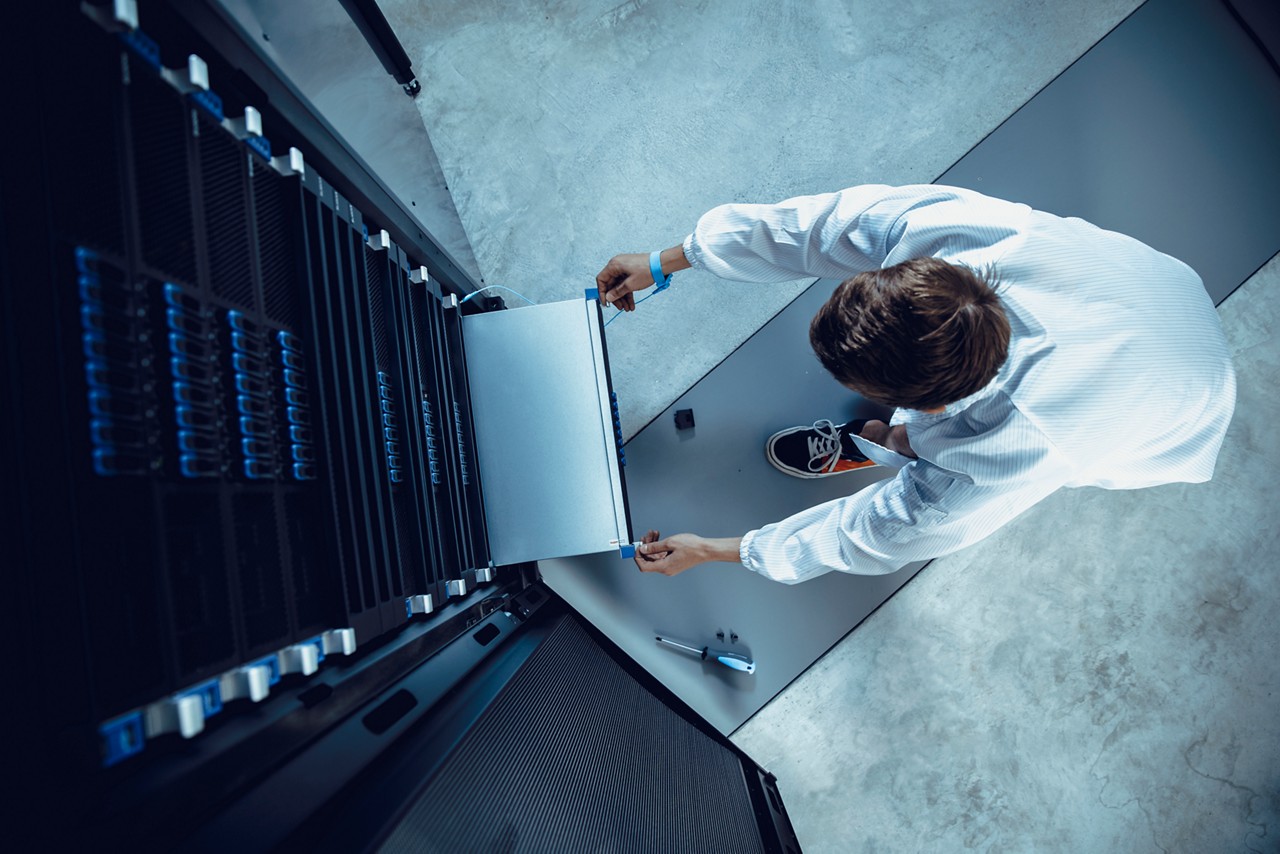
How storage decisions shape AI risk and resilience


There’s a critical disparity between perceived cyber readiness and real-world recovery capability.
According to Dell’s January 2026 Cyber Resilience Insights Report, there’s a critical disparity between perceived cyber readiness and actual recovery capability. And that confidence-capability gap is where risk lives.
�One major factor sits at the center of that gap: �how data is stored and managed.�
From capacity to control
Storage is no longer the unglamorous, largely invisible foundation that organizations depend on but rarely think about strategically. Data growth, AI adoption and security threats have elevated storage from IT plumbing to strategic differentiator. So why does storage architecture matter more now than ever?
�In the past, storage discussions centered on questions of infrastructure: performance requirements, protocol compatibility, and scale and resiliency. No more. Today, “the conversation has shifted towards ‘How is your portfolio addressing my AI transformation?’” says Rajesh Rajaraman, vice president and Research & Development CTO Storage, Cyber Resilience and Data Platforms.
�This shift reflects a change in how executives are being asked to think. Instead of starting with existing infrastructure needs and evolving from there, the most forward-looking leaders are starting with the end goal—a fully AI-enabled organization—and working backward to discern what infrastructure makes that possible.
�The result is that storage conversations now happen at a different level. Data volumes aren’t just growing; they’re diversifying in type, sensitivity and regulatory classification. �
Storage architecture increasingly determines where AI can run, how fast decisions are made, and what data can legally be used.�
AI stresses traditional architectures
While it’s tempting to think of AI as a single workload with just one set of infrastructure requirements, Rajaraman pushes back on this. “To see AI as just a snapshot of training and inferencing as two small outcomes is probably a mistake, because inferencing is not a one-time job and training is not a one-time event,” he says. “It’s a continuation.”
�
Resilience is the new performance
For years, storage performance was measured in IOPS, throughput and latency. While these metrics still matter, organizations that evaluate storage solely on performance are leaving themselves exposed, perhaps dangerously so.
�Ransomware and other destructive cyber threats have changed everything, including the ability to detect not just access violations, but subtle changes to data content itself. When recovery infrastructure is compromised, one ransomware incident becomes a disaster.
�“You can’t have an AI transformation journey without having to think about a data security or overall AI security journey,” Rajaraman says. “They’re not two things. They’re built into one.”
He believes ransomware strategy needs to start as a data strategy that addresses detection, connection and recovery across the entire pipeline, not just at individual endpoints.
The infrastructure imperative
The organizations that will lead in the future won’t be those with the most storage. They’ll be the ones who have started treating storage as strategy, not merely as infrastructure. “Every executive out there needs to be looking at their data strategy first,” Rajaraman says. “A cornerstone for any data strategy is your storage.”
Control, AI-readiness and resilience aren’t separate conversations. They’re all part of a conversation that must be resolved at the architecture level before organizations commit to specific technology choices. “Start with the end outcome, which is the end-to-end transformation of your entire company or organization for an AI-driven organization,” he says.
In a world where digital agents run end-to-end across an organization’s operations, training and inference become continuous processes happening at every point in the data pipeline —not isolated workloads sitting in one place but part of a broader continuum that runs across the entire data lifecycle. “New data needs to be enabled, trained, curated, inferred upon,” he says, “and in the entirety of the systems.”
�
Then there are load-bearing constraints—data that can’t cross borders or touch public cloud infrastructure—all of which must be auditable at every step.
�The practical implication is easy to underestimate. Organizations designing their storage for AI today aren’t just solving a performance problem. They’re deciding which AI use cases they’ll be able to pursue in the future.�
“Everything along the way must be intelligent,” he says. “No data is just in isolation. Data is part of a continuum of things.”
�Dell frames this as a three-part discipline: securing the environment to reduce the attack surface, detecting threats in real time at the data layer, and recovering operations rapidly when incidents occur. When these capabilities are architected into storage from the ground up rather than bolted on after the fact, organizations move from reactive to resilient.�


Produced by Reuters Plus for


The Reuters news staff had no role in the production of this content. �It was created by Reuters Plus, the brand marketing studio of Reuters.


Disclaimer: The Reuters news staff had no role in the production of this content. It was created by Reuters Plus, the brand marketing studio of Reuters. To work with Reuters Plus, contact us here.
Discover more
Data Storage Products �| Dell USA
Find out how to achieve your data needs with efficient, resilient, and future-ready solutions.
Read now


01
Secure the environment to reduce the attack surface
Detect threats in real time at the data layer
03
02
Recover operations rapidly when incidents occur
Data disciplines:
“”
Rajesh Rajaraman
New data needs to be enabled, trained, curated, inferred upon, and in the entirety of the systems.
of U.S. business executives cite emerging tech as a growth driver yet
of those leaders are kept awake at night worrying about privacy and security.
01
95
84
%
%


The infrastructure advantage

The gap between exploring AI and being ready for it comes down to one thing: your data infrastructure.
Read now

Moving from AI �interested to AI ready
Recommended reading

Storage foundations
for AI innovation.
Read now

The infrastructure �advantage
Explore the hub